 Ahmadreza Samadi / Home
Technology and proptech, explained
What makes a building ready for AI data centers?
Cloud AI runs on real computers. An empty hall does not establish site readiness. This original learning framework asks what evidence is available before a specialist evaluates a facility.
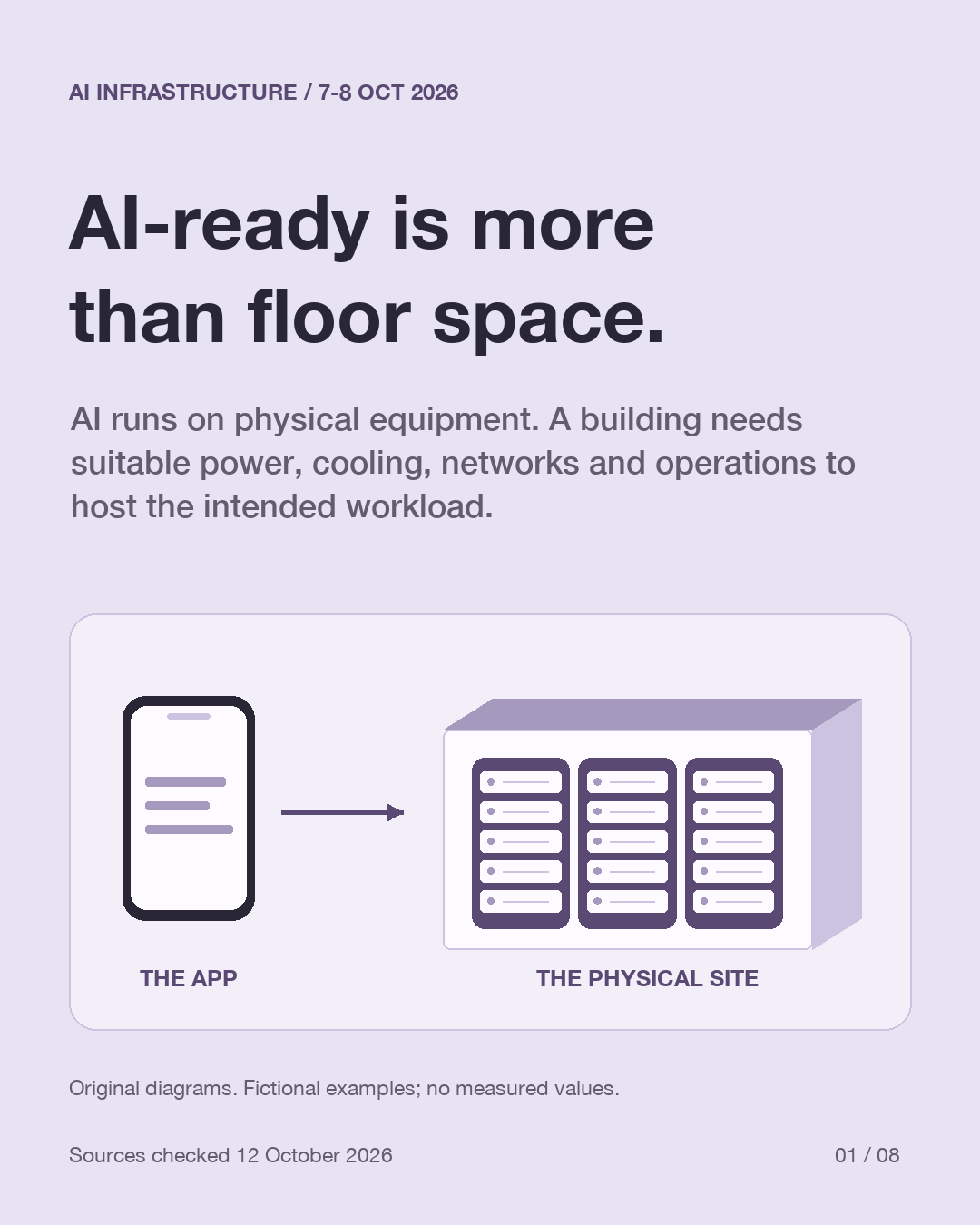
The physical site matters
Power, heat removal, networks and operations shape whether a building can host the intended computing workload.
Documents come before a readiness claim
A dated power document or a cooling plan provides something to examine. It does not certify performance or readiness.
Specialists make the assessment
The fictional comparison below is a learning aid, not engineering signoff or investment advice.
Why is this a current proptech topic?
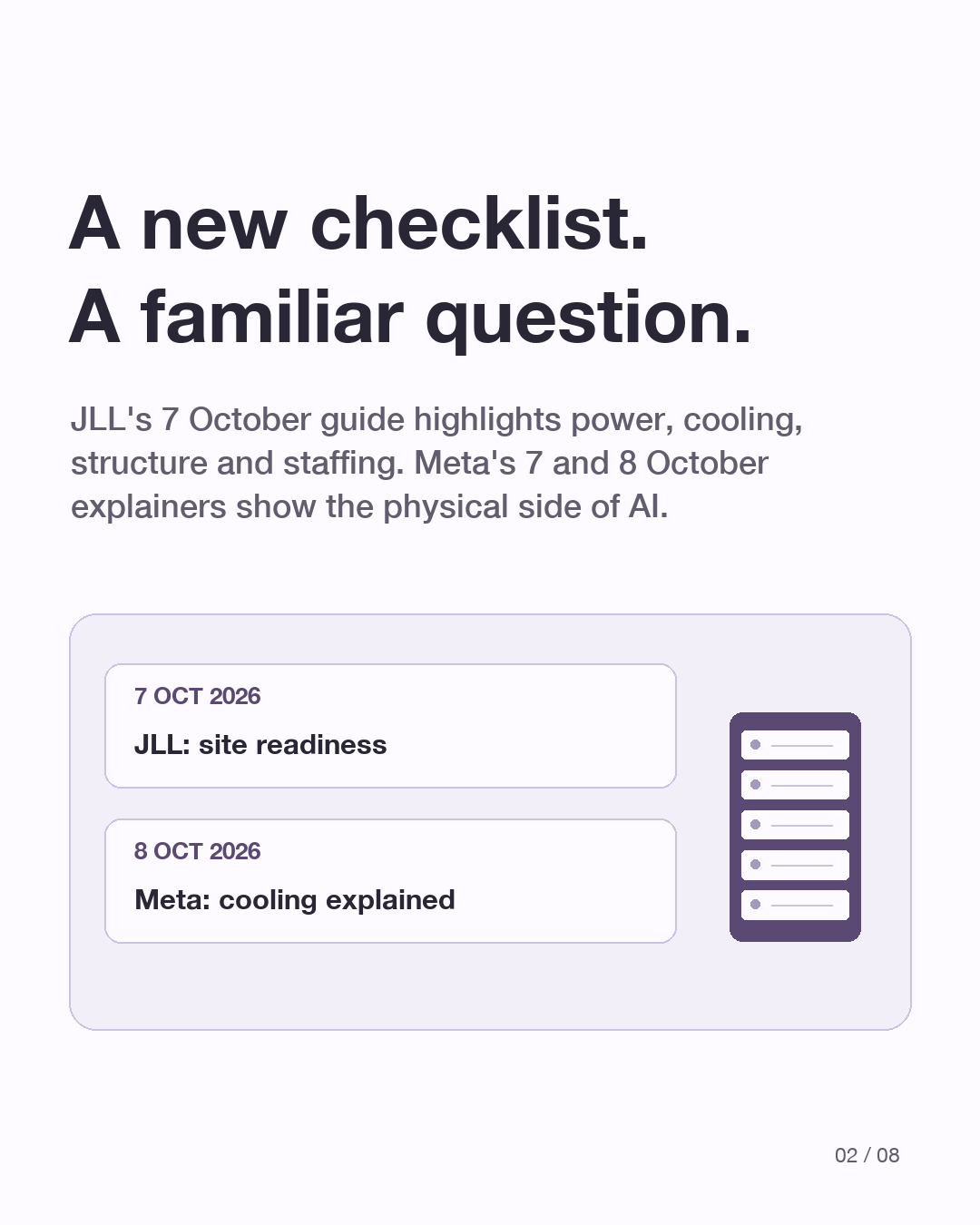
The public introduction to JLL's 7 October 2026 guide lists power, cooling, structural integrity and staffing as readiness criteria. Meta's 7 and 8 October explainers also put physical AI infrastructure in focus. This post uses JLL's public introduction, not its downloadable scorecard.
Source: JLL: Is your data center ready for AI? A critical infrastructure readiness scorecard · Meta: Debunking the Biggest Data Center Myths · Meta: Why Data Centers Are Such a Big Part of Meta’s AI Approach
Why is floor space only the starting point?
Servers, storage and network equipment occupy physical facilities. Electricity powers the equipment and cooling removes heat. A property description alone does not establish that those systems can support a particular workload.
Source: IBM: What is a data center?
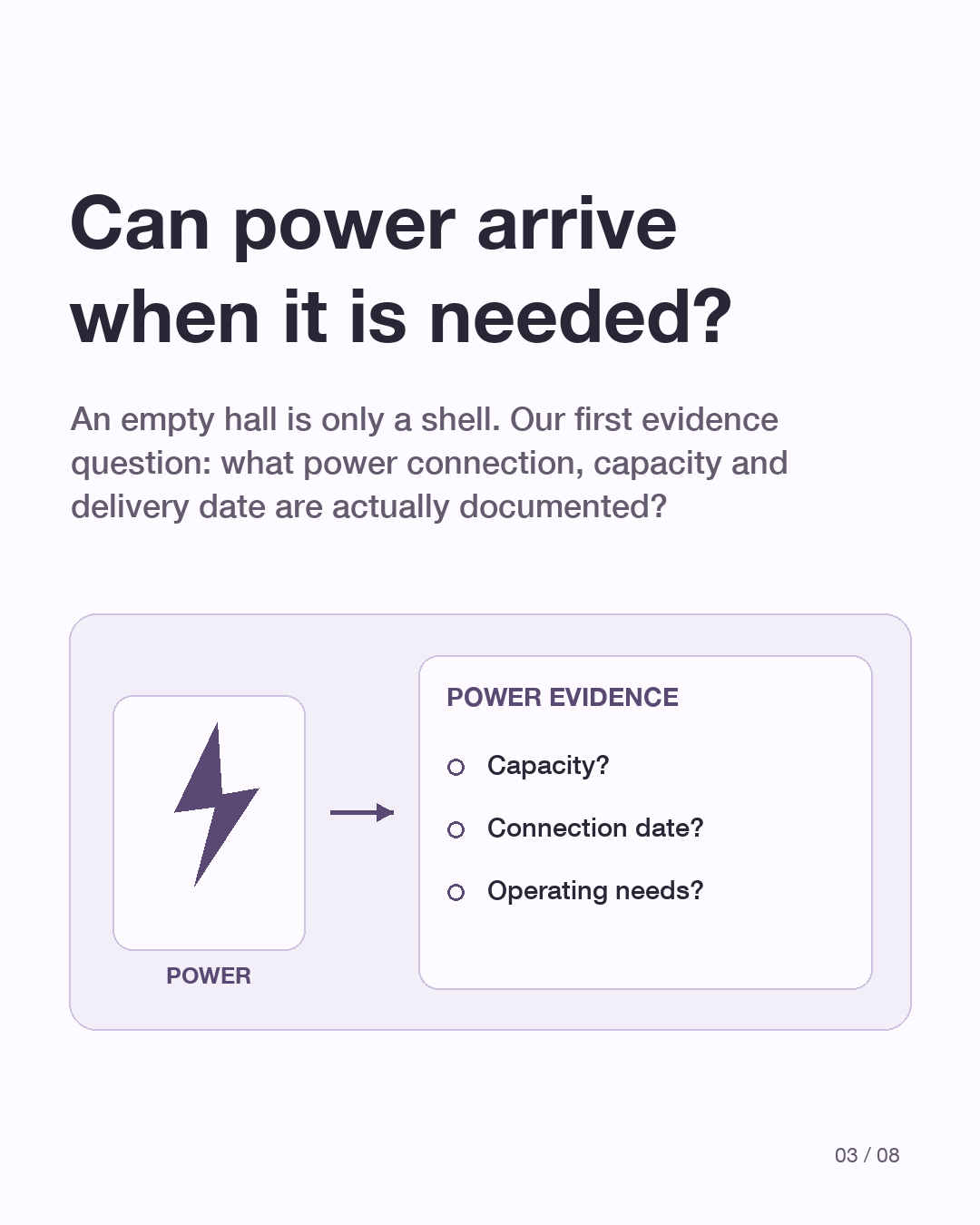
What should the power evidence show?
Our original evidence questions are: what connection and capacity are documented, and what delivery date is supported? Ask who reviewed the information and which operating requirements it covers. A specialist still needs to evaluate the intended workload and site.
Source: JLL: Is your data center ready for AI? A critical infrastructure readiness scorecard · Meta: Debunking the Biggest Data Center Myths
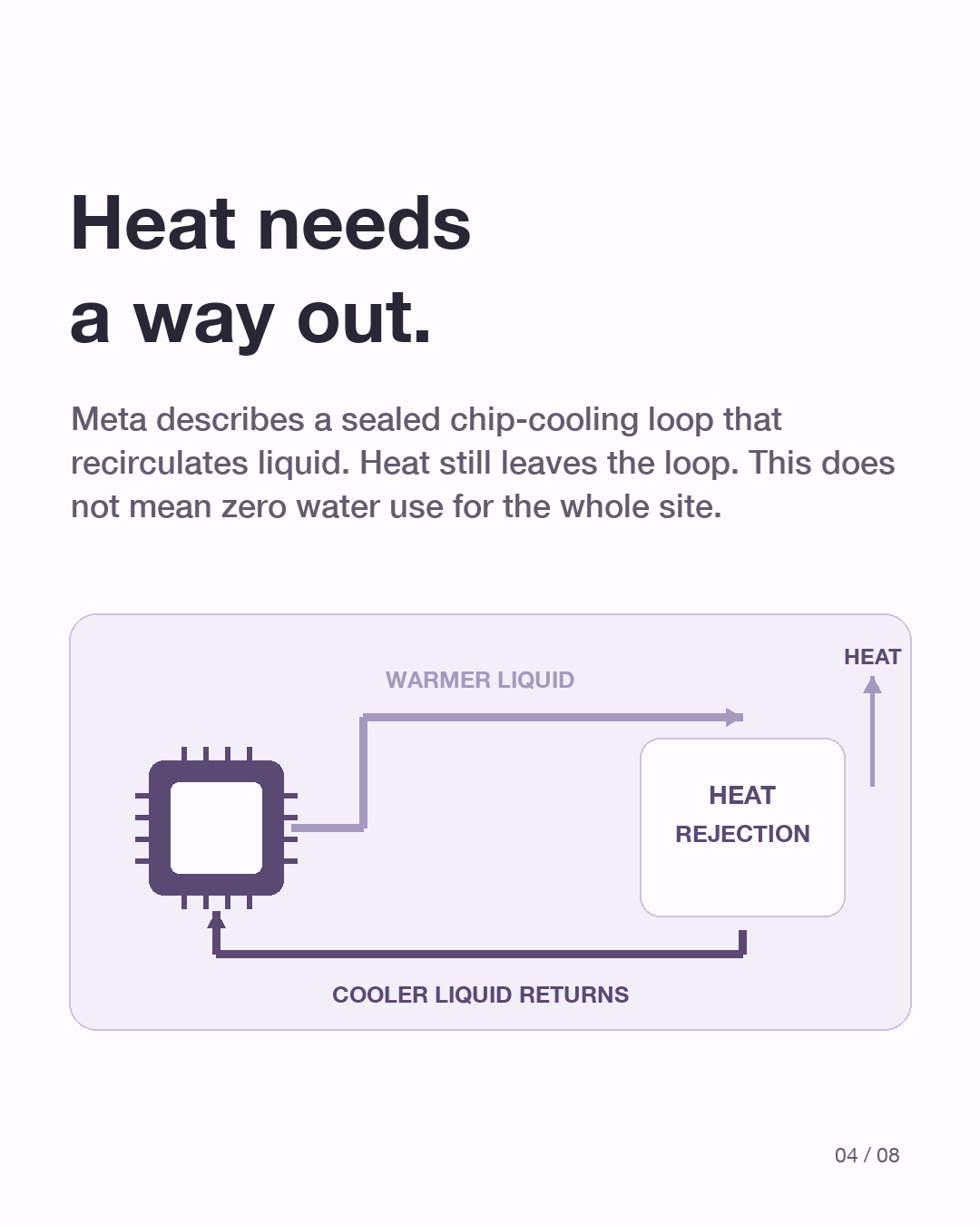
Does a closed cooling loop mean zero site water use?
Meta describes a sealed chip-cooling loop that recirculates liquid while a heat-rejection system removes heat. That is a description of the stated design. It is not a claim that every operator uses it or proof of zero water use across an entire facility.
Where do networks and the building fit?
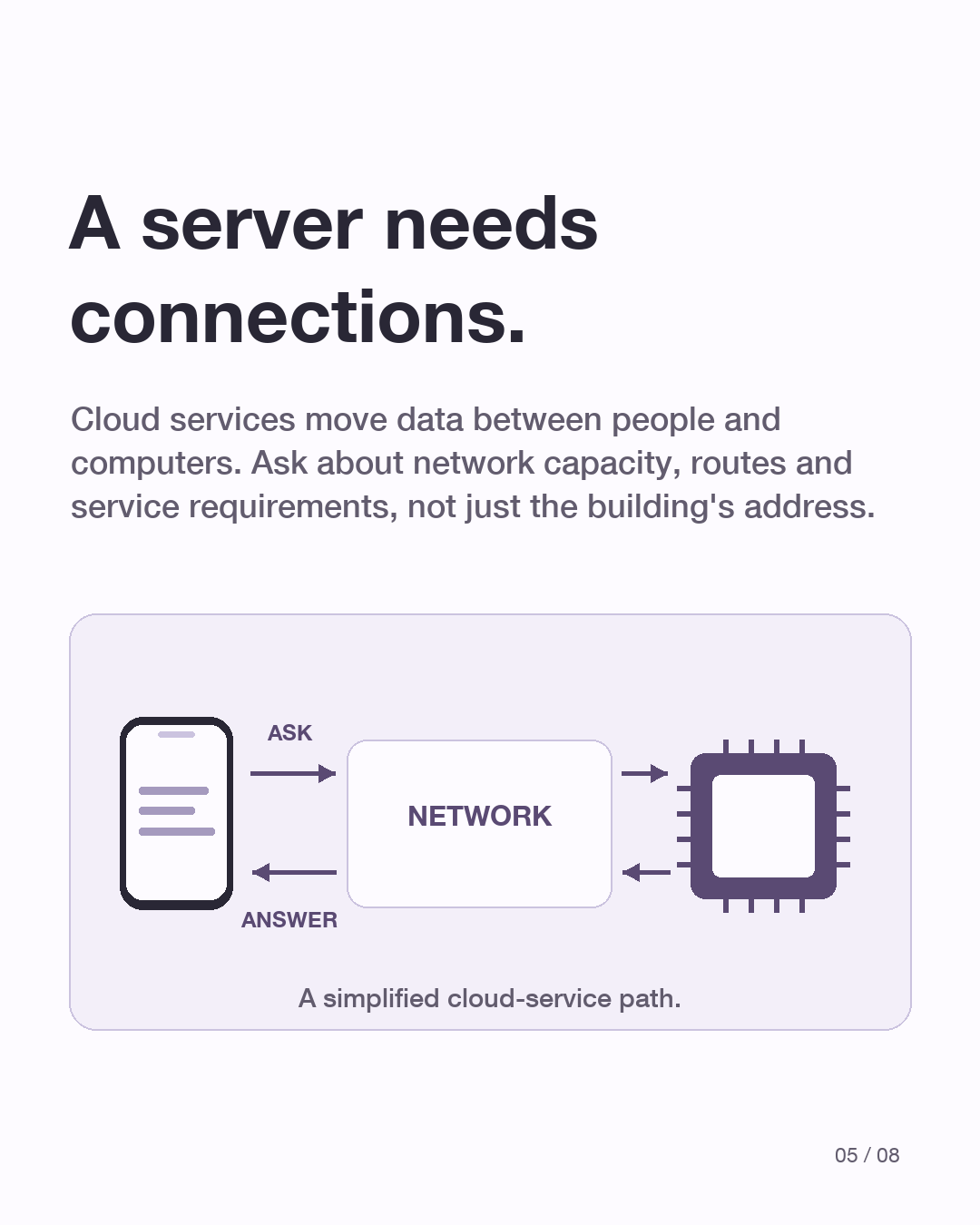
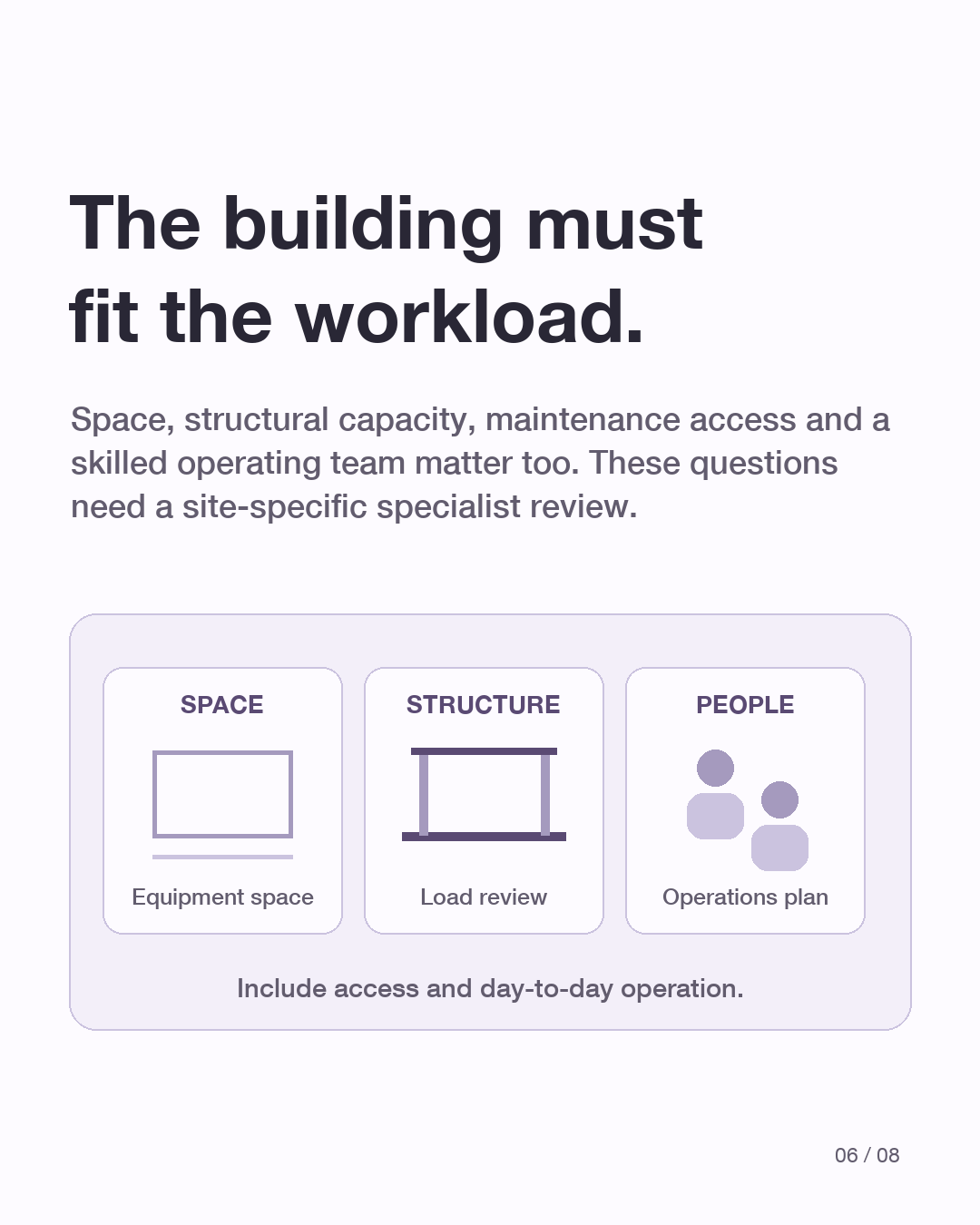
For a cloud service, data must move between users and computers. Ask about network routes, capacity and service requirements. Also ask about equipment space, structural capacity, maintenance access and the operating team. These are starting questions, not a complete design checklist.
Source: JLL: Is your data center ready for AI? A critical infrastructure readiness scorecard · IBM: What is a data center?
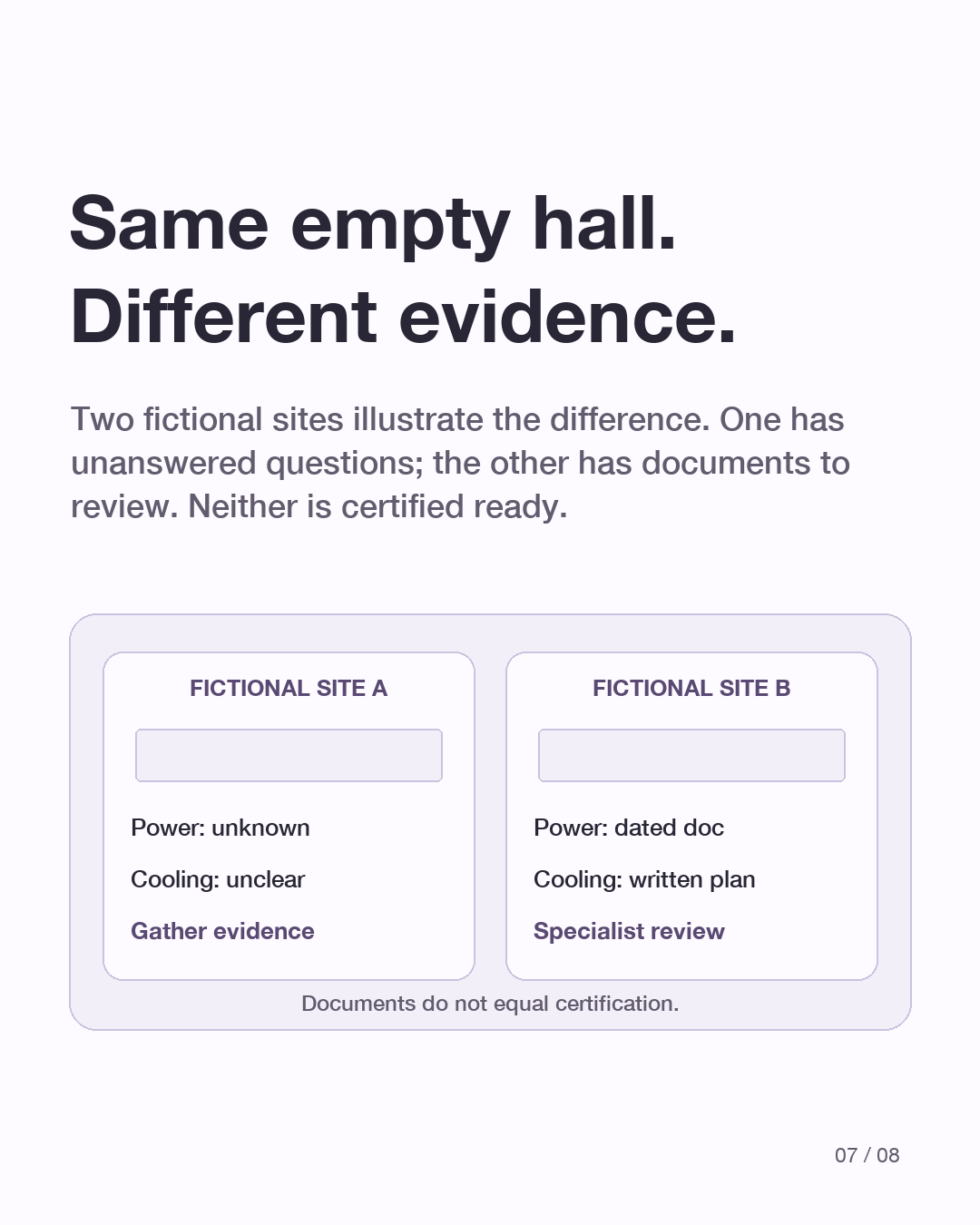
How do the fictional sites differ?
Fictional Site A has an unknown power connection date and an unclear cooling plan. Site B has a dated power document and a written cooling plan. Those documents are still unreviewed; network and building requirements remain unspecified in this example. Neither site is declared ready or certified.
What is the practical takeaway?
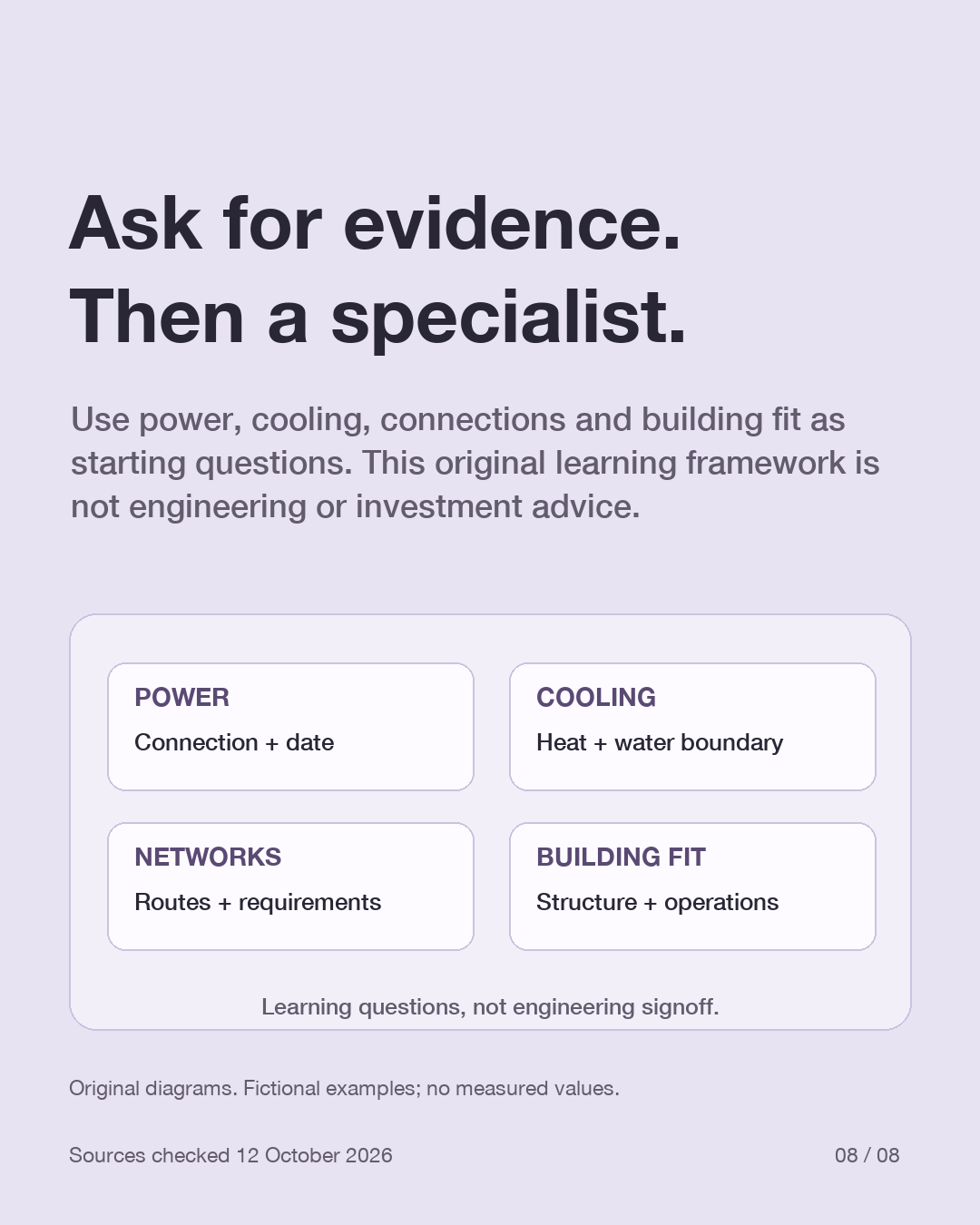
Before concluding that a site is suitable, gather evidence for power, cooling, connections and building fit. Then seek a qualified, site-specific assessment of the actual workload and requirements. The diagrams do not predict project outcomes, costs, savings or investment returns.
Source: JLL: Is your data center ready for AI? A critical infrastructure readiness scorecard · IBM: What is a data center?
See the explanation in slides
These original diagrams explain the mechanism. The carousel is in English.
View all 8 English slides
Download the English carousel PDF
Sources
Primary sources checked on 2026-10-12. Dated announcements and operator reports are attributed in the explanation; availability and terms can change.