 Ahmadreza Samadi / Home
Technology and proptech, explained
Why did the lights go out while you were there?
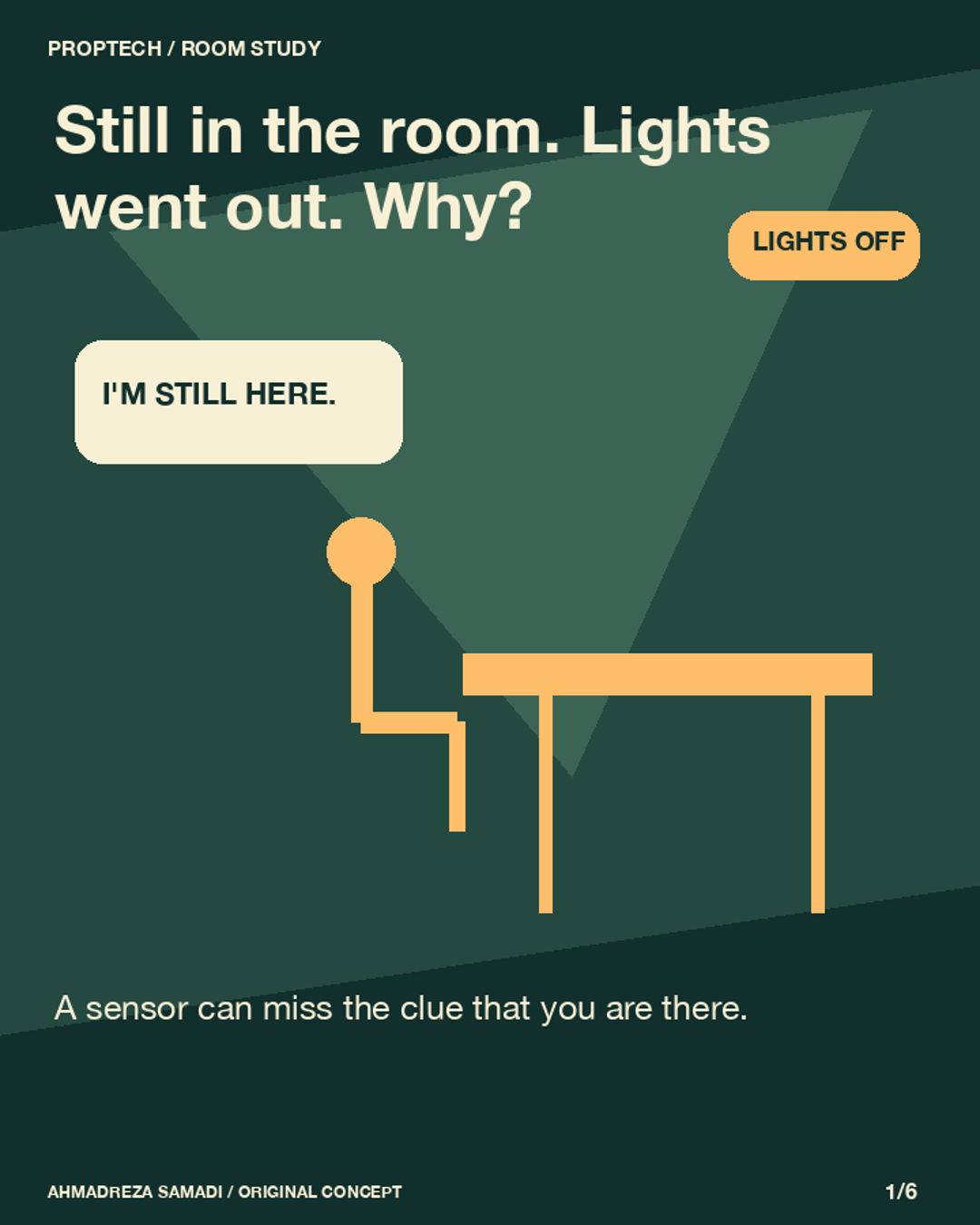
A sensor can miss the clue that you are there.
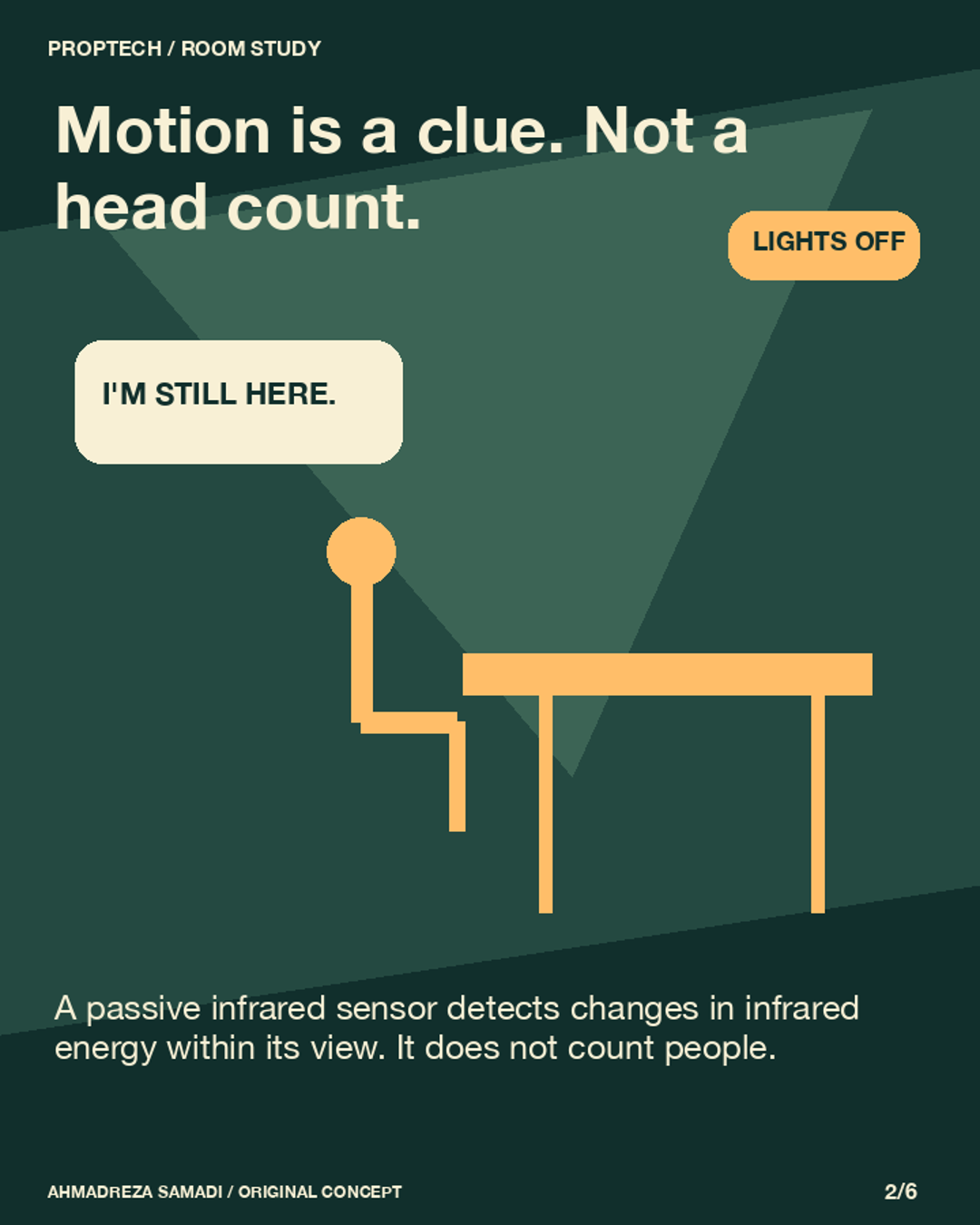
Motion is a clue. Not a head count.
A passive infrared sensor detects changes in infrared energy within its view. It does not count people.
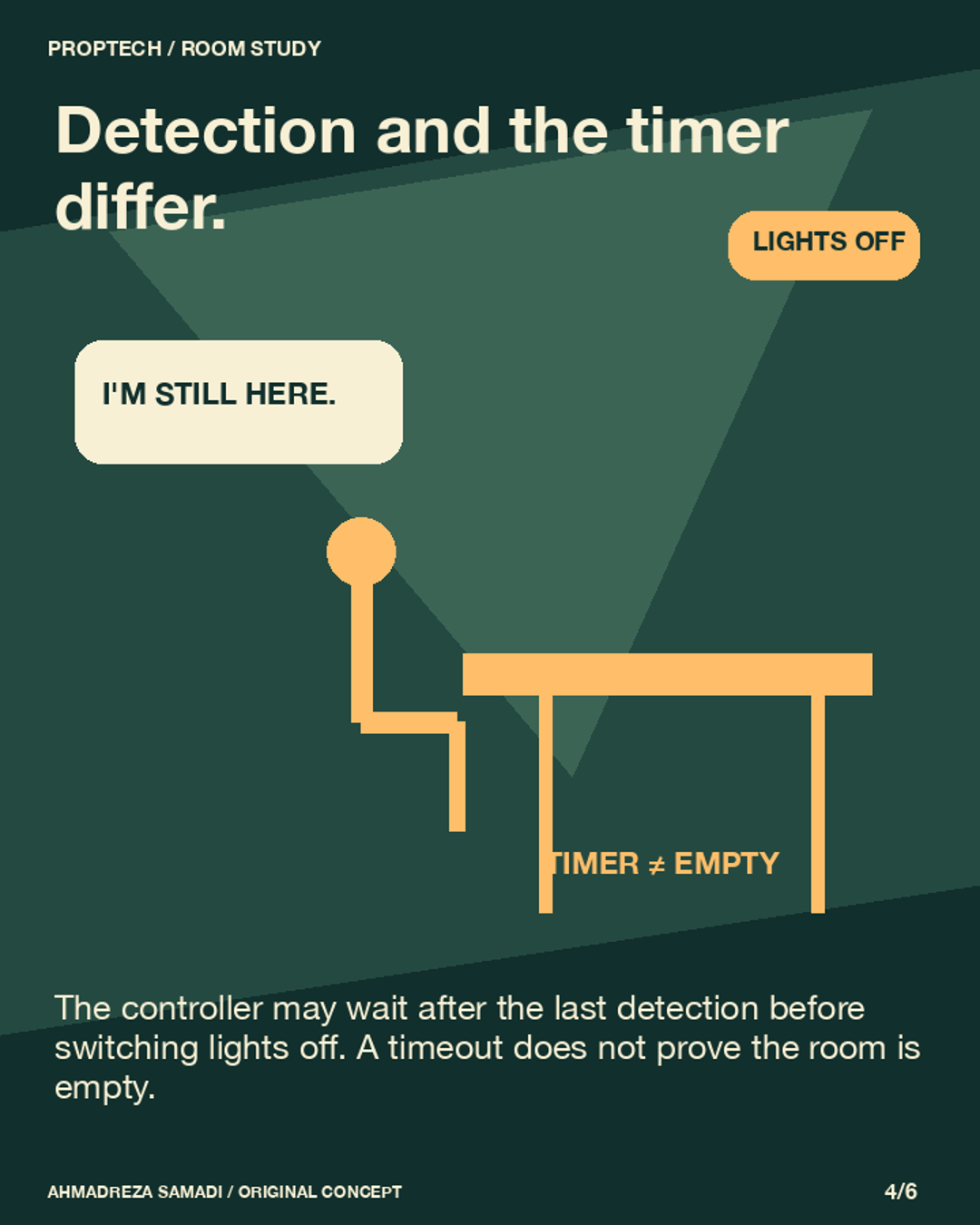
Detection and the timer differ.
The controller may wait after the last detection before switching lights off. A timeout does not prove the room is empty.
Ask these before replacing the sensor.
What can it see? When does it time out? Does it detect a seated person? Ask the facilities team to check. Our original three-question reading framework uses fictional scenes, not measured results. Event listing only, no attendance or launch claim. Fictional room, no actual fault diagnosis, energy savings, code compliance or wiring advice.
Still in the room. Lights went out. Why?
A sensor can miss the clue that you are there.
Motion is a clue. Not a head count.
A passive infrared sensor detects changes in infrared energy within its view. It does not count people.
Source: DOE:Lighting Retrofit Workbook,2001; background,not current codes
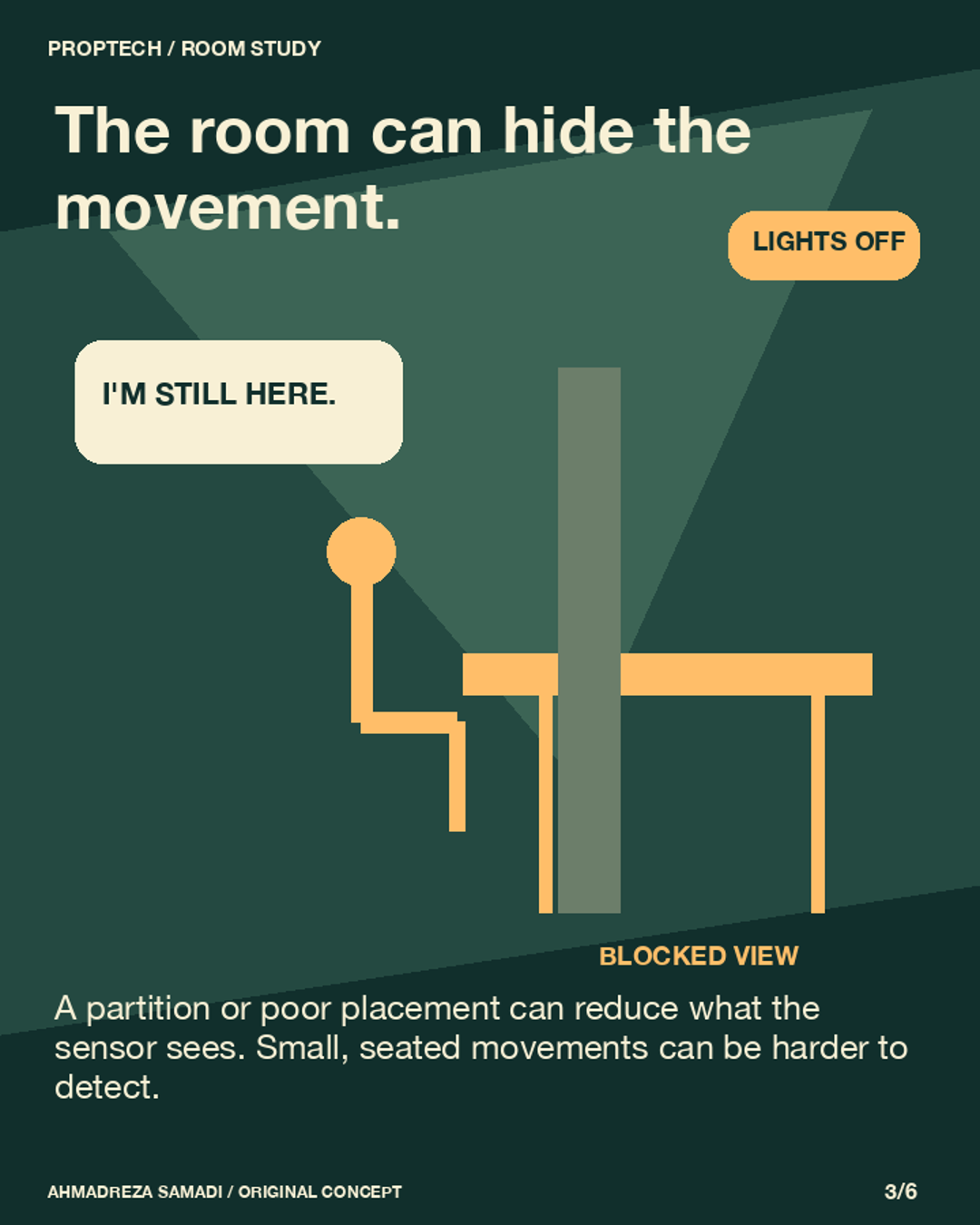
The room can hide the movement.
A partition or poor placement can reduce what the sensor sees. Small, seated movements can be harder to detect.
Source: DOE:Lighting Retrofit Workbook,2001; background,not current codes
Detection and the timer differ.
The controller may wait after the last detection before switching lights off. A timeout does not prove the room is empty.
Source: DOE:Lighting Retrofit Workbook,2001; background,not current codes
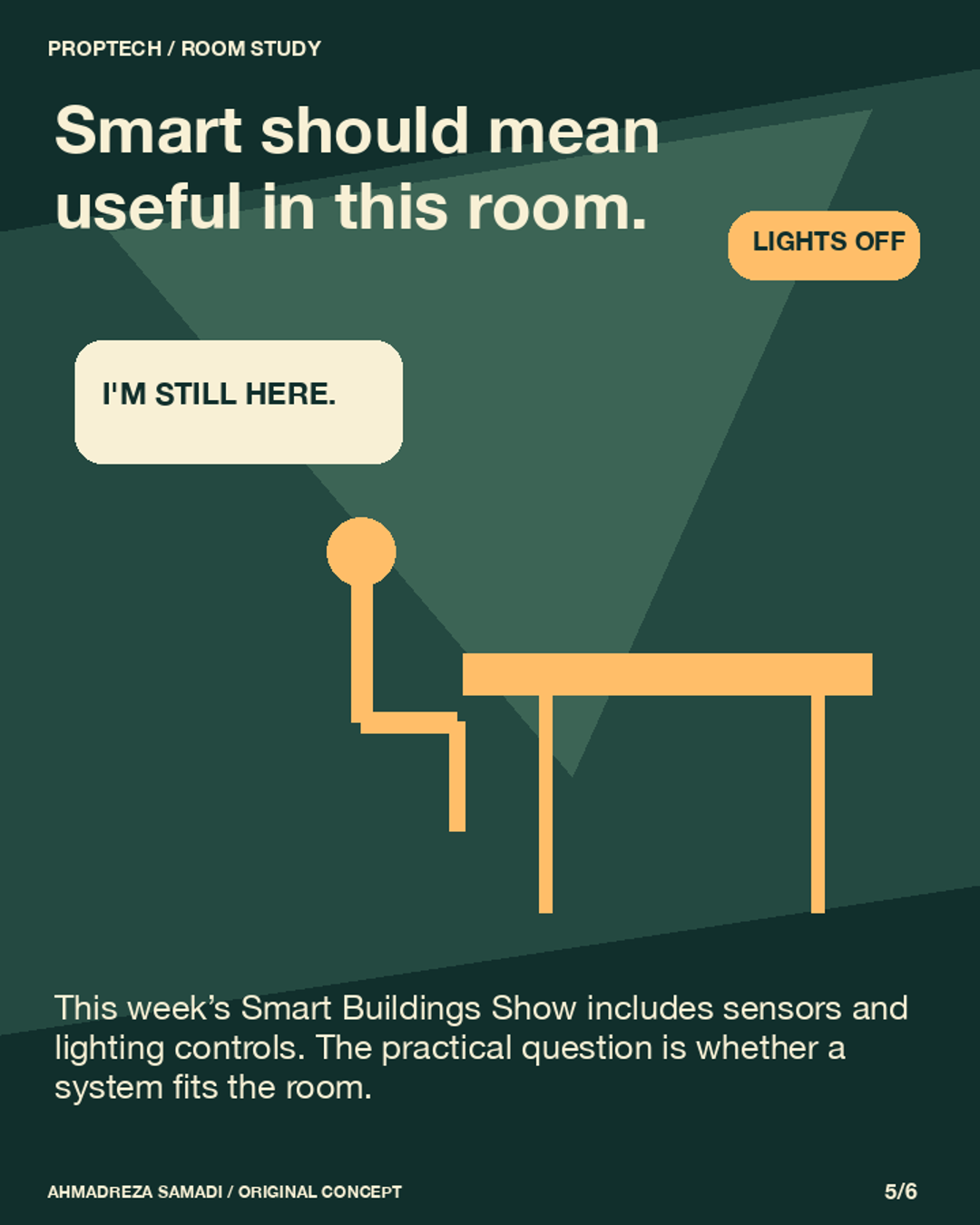
Smart should mean useful in this room.
This week’s Smart Buildings Show includes sensors and lighting controls. The practical question is whether a system fits the room.
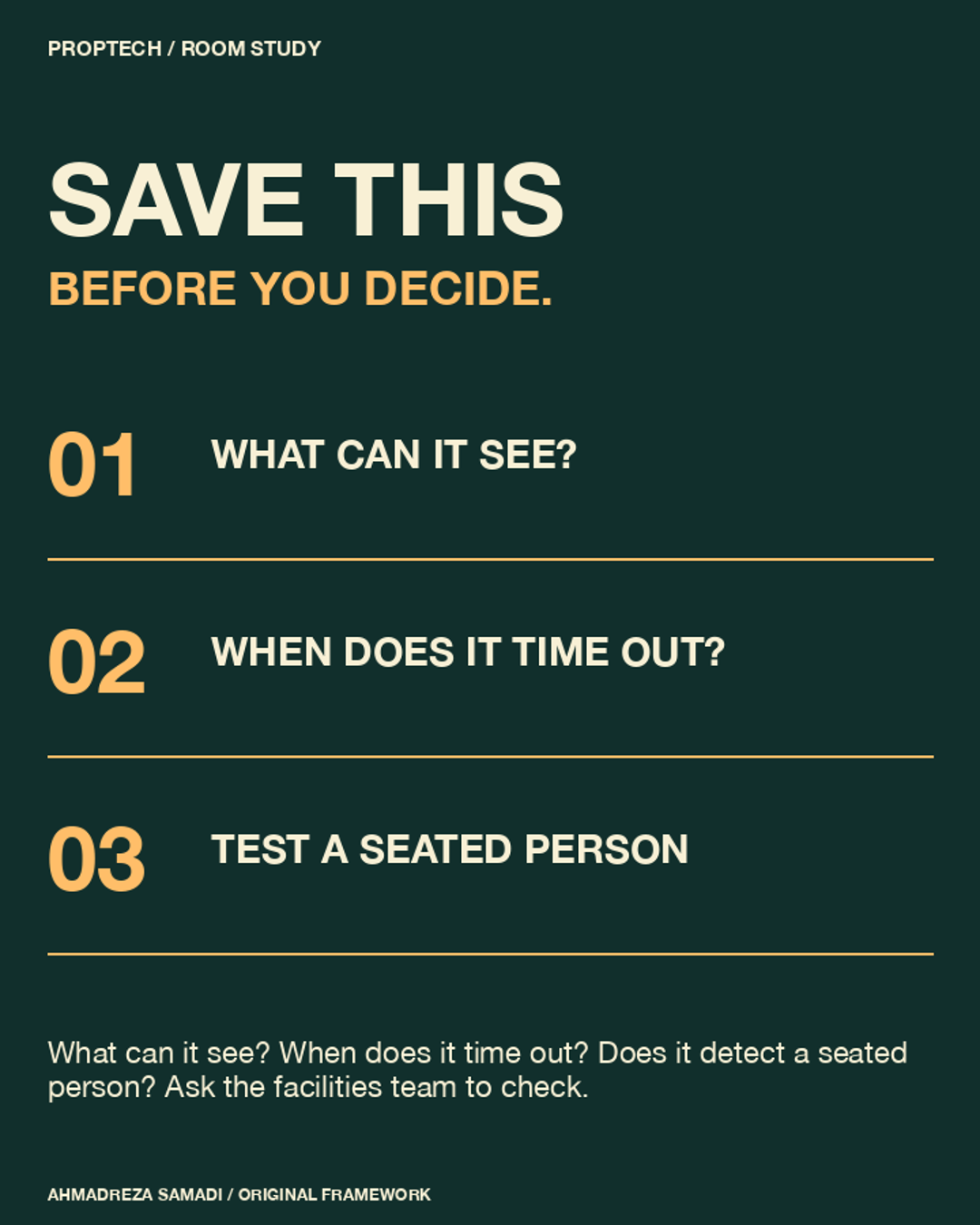
Ask these before replacing the sensor.
What can it see? When does it time out? Does it detect a seated person? Ask the facilities team to check. Our original three-question reading framework uses fictional scenes, not measured results. Event listing only, no attendance or launch claim. Fictional room, no actual fault diagnosis, energy savings, code compliance or wiring advice.
Source: DOE:Sensors and Fault Detection; background research
See the explanation in slides
These original diagrams explain the mechanism. The carousel is in English.
View all 6 English slides
Download the English carousel PDF
Sources
Primary sources checked on 2026-10-14. Dated announcements and operator reports are attributed in the explanation; availability and terms can change.