 Ahmadreza Samadi / Home
Everyday ideas, explained
Why can AI lose track of something you already said?
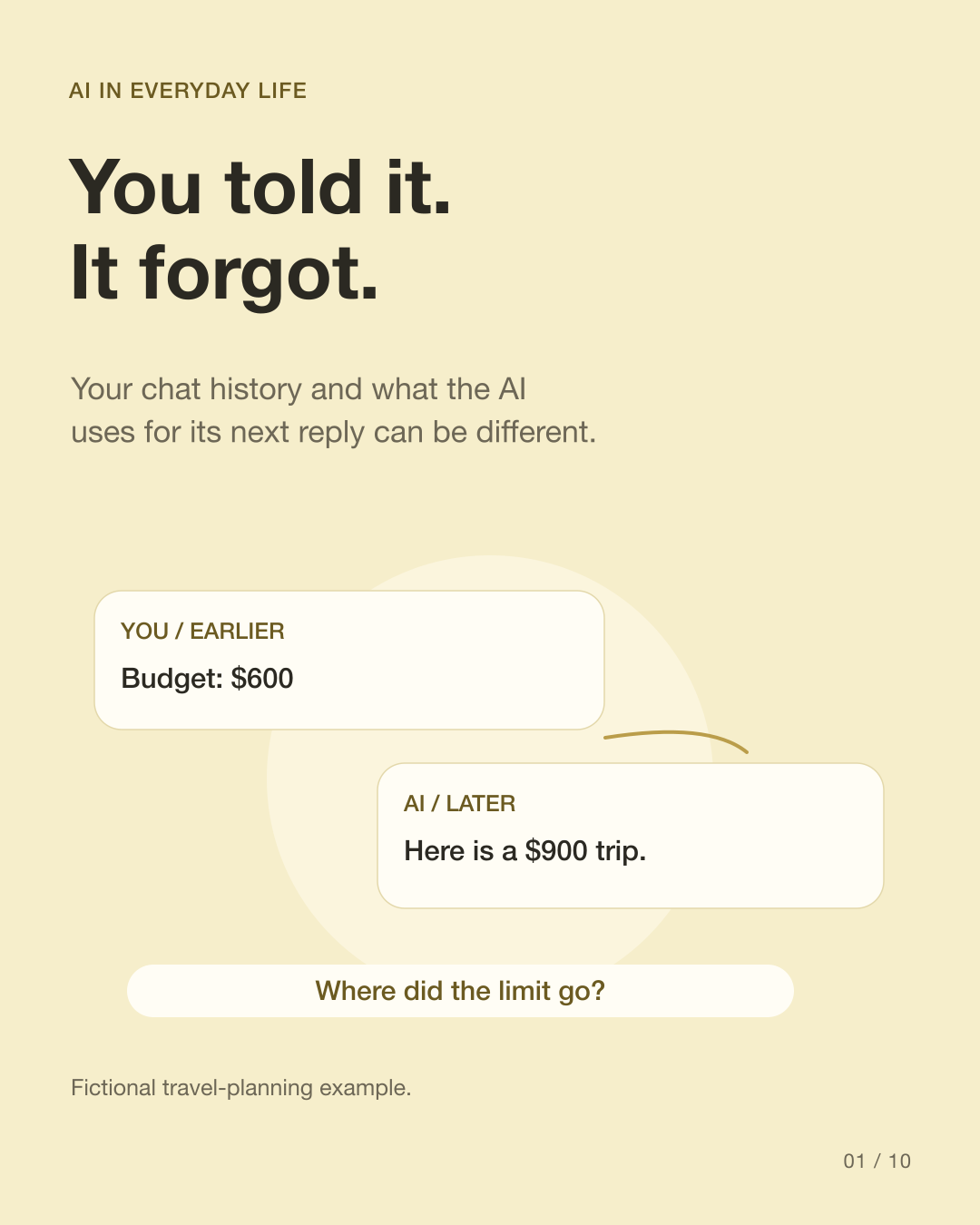
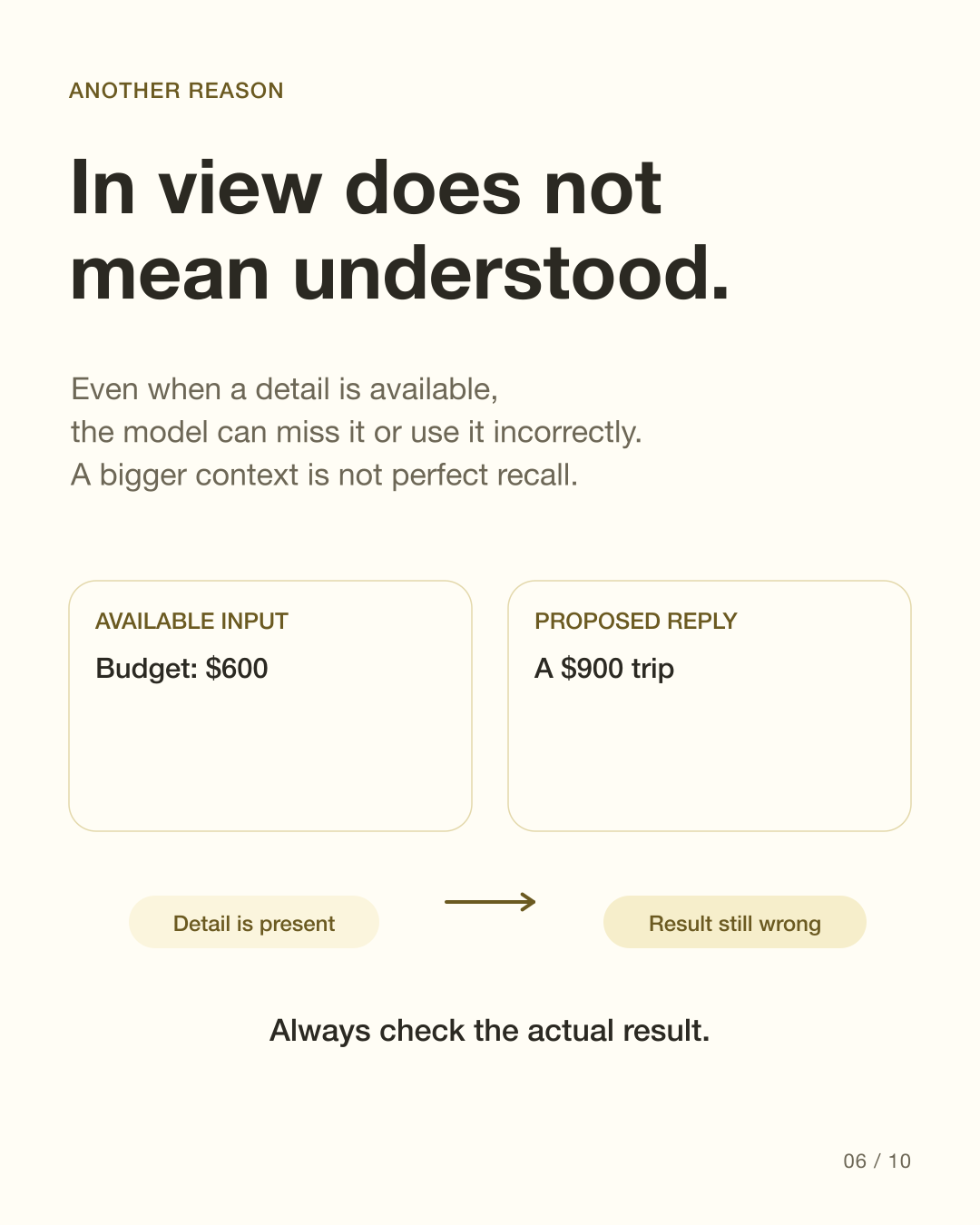
You told an AI assistant the budget was $600, then it proposed a $900 trip. This fictional example makes one distinction clear: what you can scroll back to see is not necessarily everything used for the next reply.
At a glance
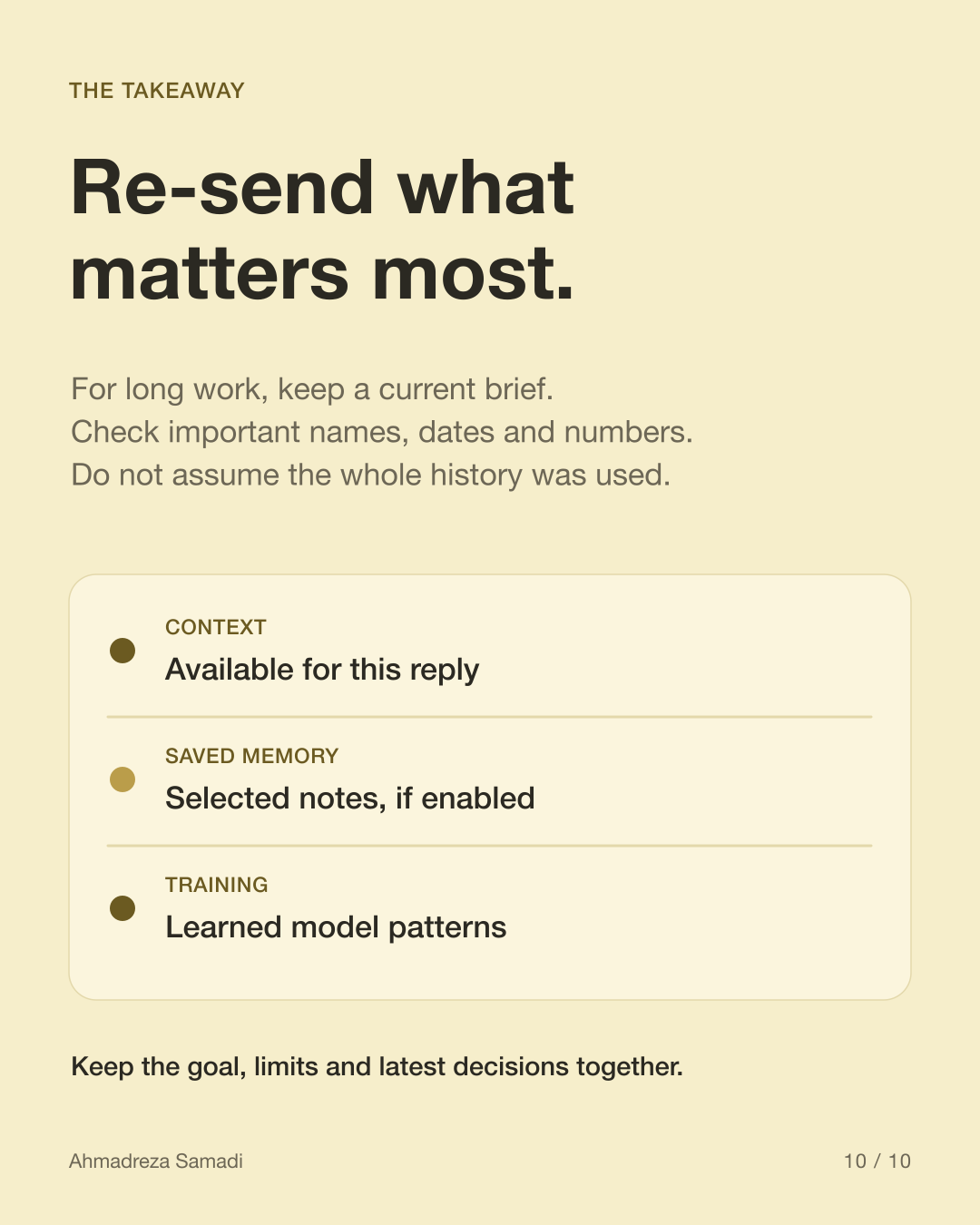
Context
Information available for this reply.
Memory
Selected saved notes, if the app supports them.
Training
How the model learned its underlying patterns.
What input does an AI use for each reply?
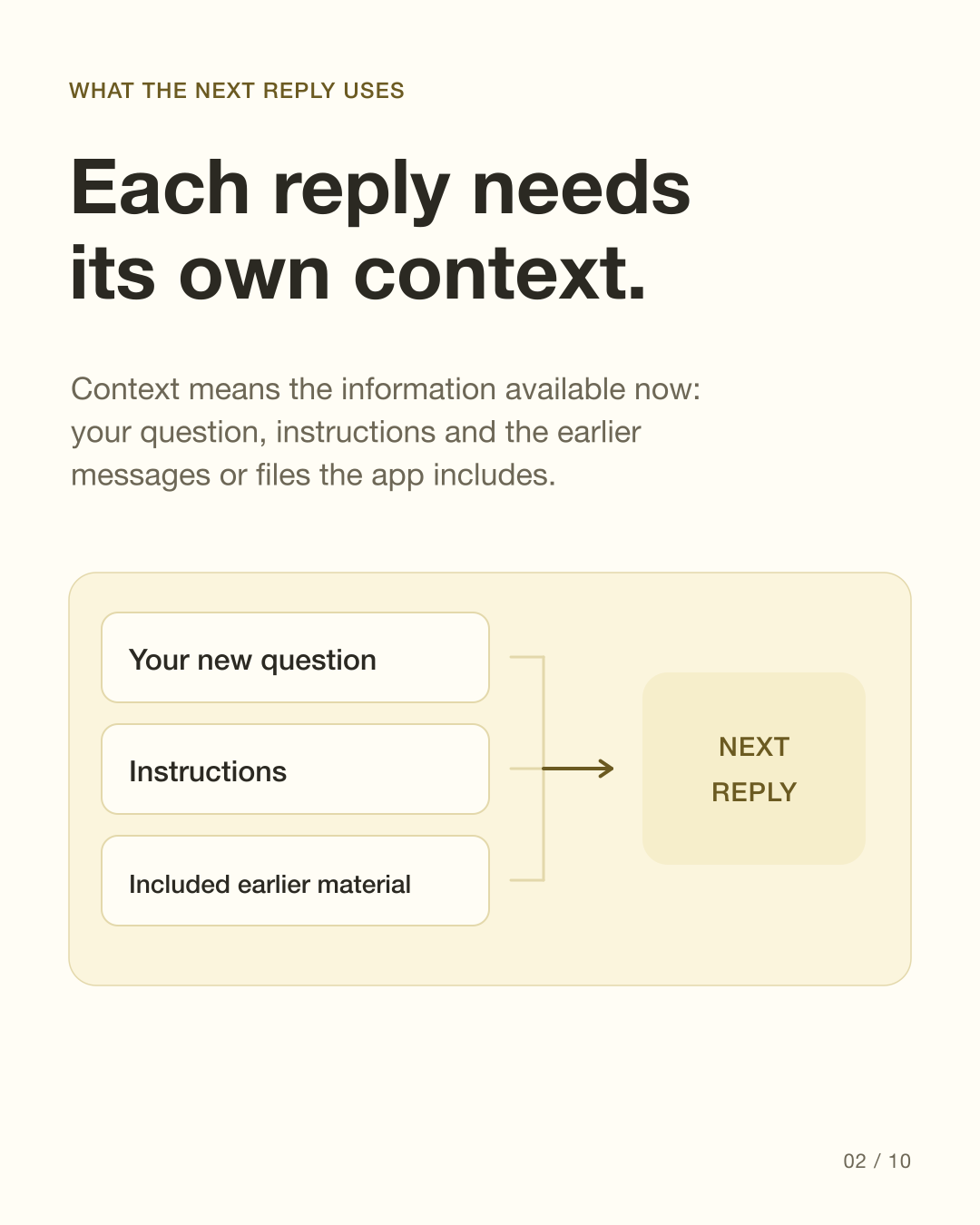
Context is the input available when a model produces a response. It can include your question, instructions, earlier messages and relevant files or tool results. The context window is a limited amount of working space. Its size depends on the model; text, images and the new answer can all consume it.
Source: Anthropic: Context windows
A long chat may be managed by the app
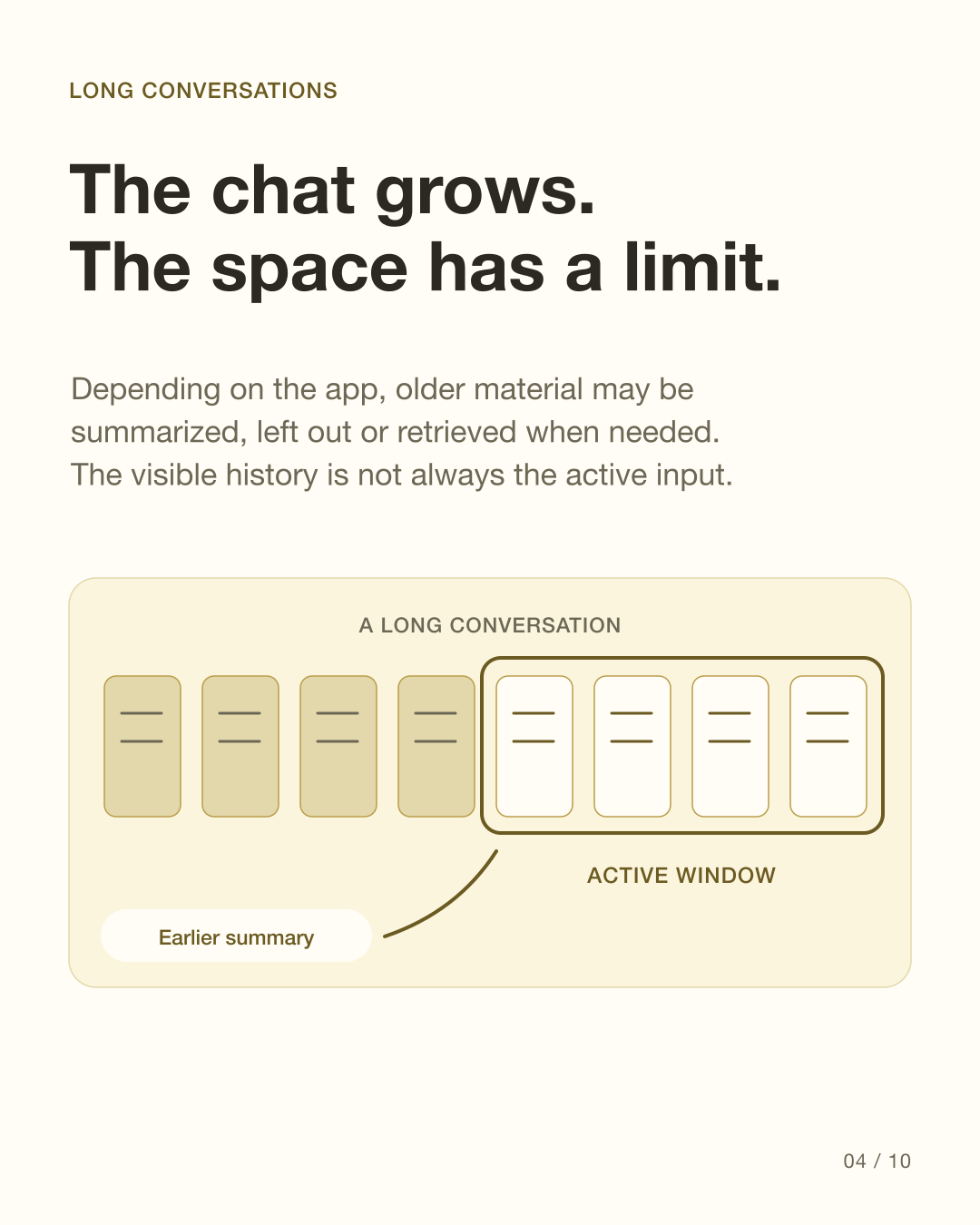
A chat application can summarize earlier turns, leave some material out or retrieve past information when needed. Different products handle this differently. A visible transcript and the current input therefore need not be identical. The working-desk illustration is an analogy, not a literal description of storage.
Source: Anthropic: Context windows · Anthropic: Effective context engineering for AI agents · Claude Help Center: Chat search and memory
A summary can drop a detail
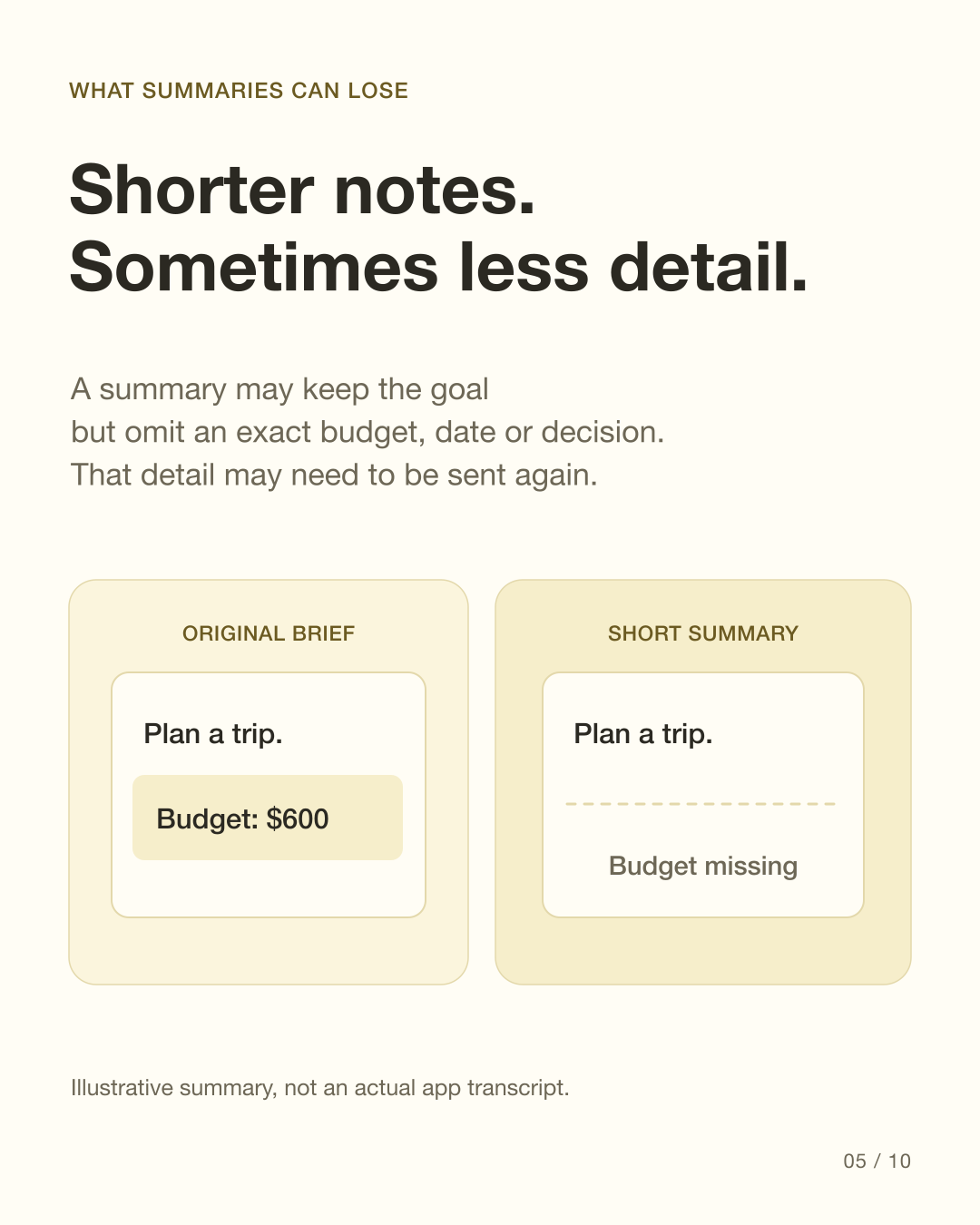
A shorter summary may preserve the main goal but omit an exact limit, date or decision. In the fictional example, plan a trip survives while budget $600 is missing. Summarization can help a conversation continue, but the selection of what to keep matters.
Source: Anthropic: Effective context engineering for AI agents
Available does not mean correctly used
A model can overlook or misuse a detail that is still in its input. Larger context is not a guarantee of better recall or a correct answer. Losing access to a constraint and failing to follow an available constraint are different failure modes.
Source: Anthropic: Context windows · Anthropic: Effective context engineering for AI agents
How does saved memory differ from current context?
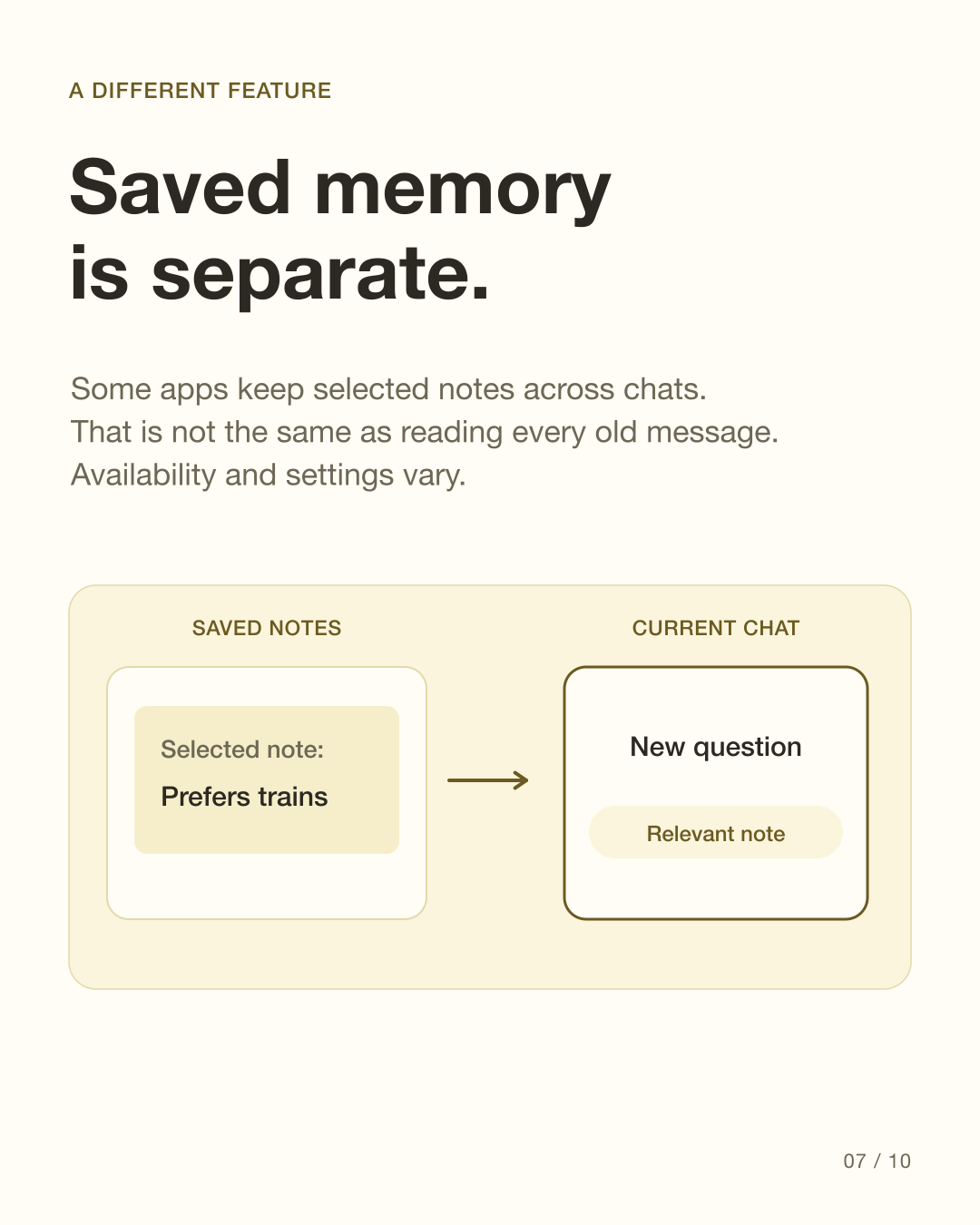
Some applications save selected information across conversations or retrieve relevant earlier chats. These features depend on the product, settings and access. They are not the same as including every old message in every reply. Review important saved notes rather than assuming a complete permanent transcript is active.
A message is not an instant training step
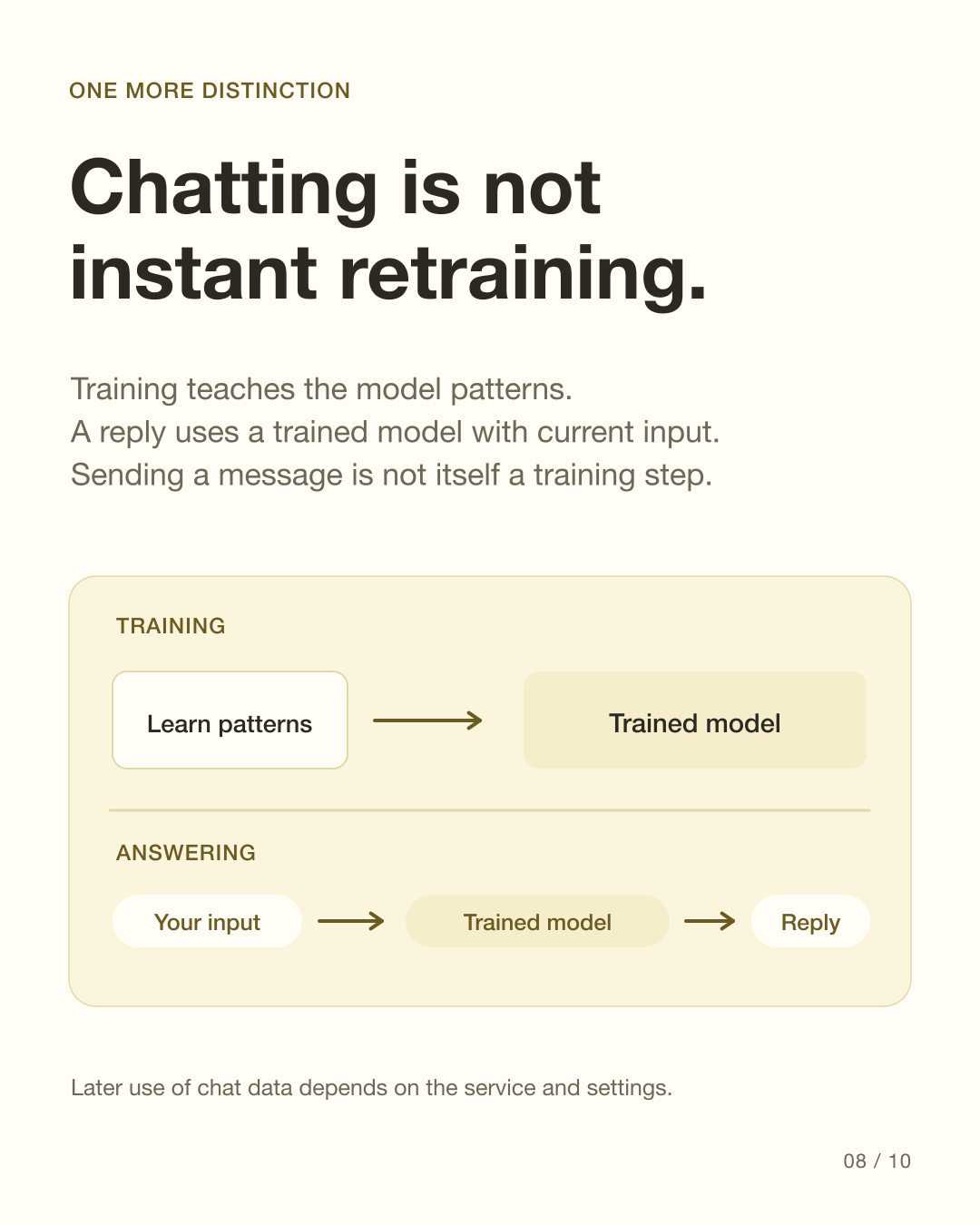
Training adjusts a model to learn patterns. Ordinary answering, called inference, uses a trained model on current input. Sending a chat message does not itself instantly retrain the model. A service may have separate policies for later use of chat data; check its settings and terms.
Source: IBM: What is AI inference?
Keep a short current brief
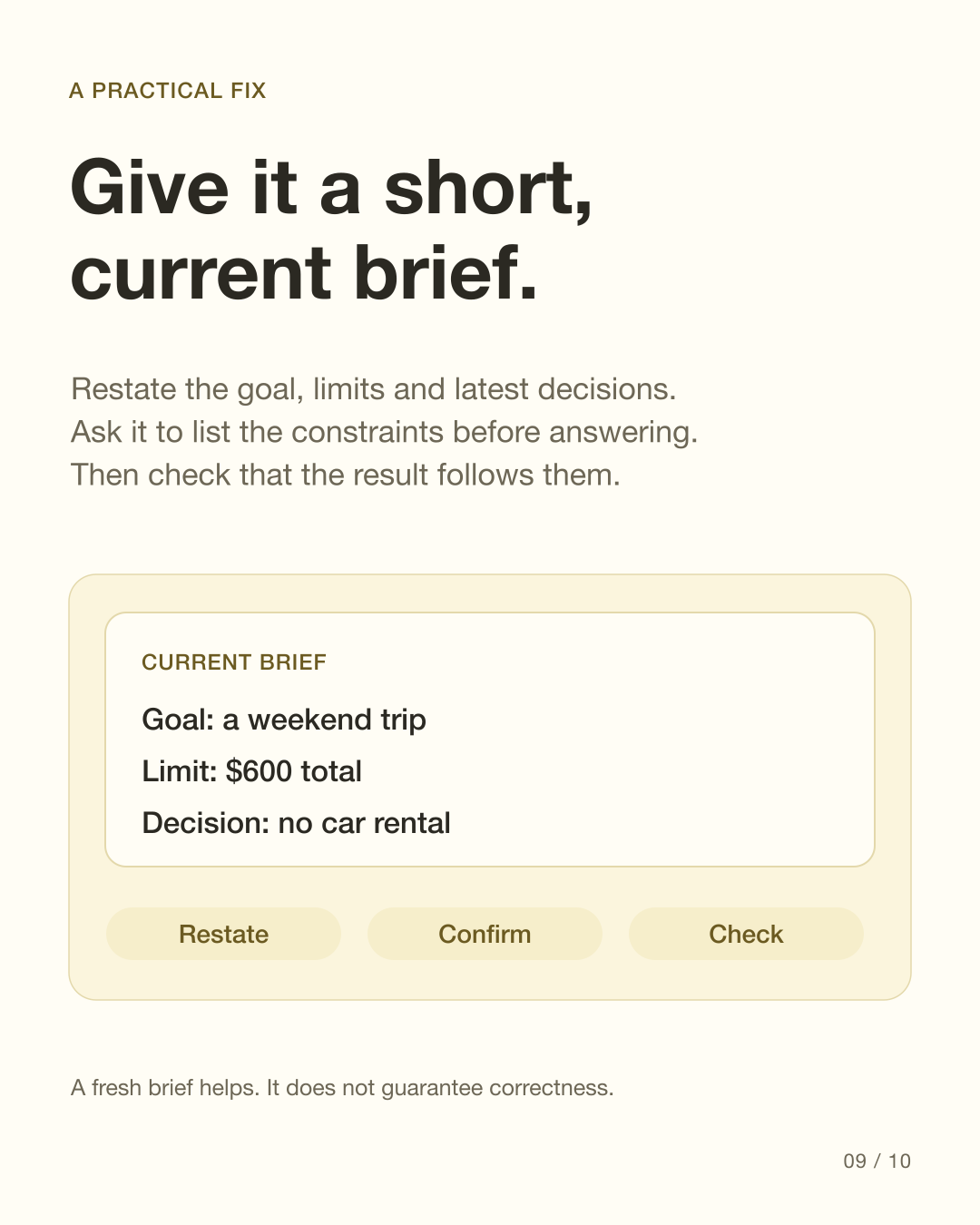
For a long task, restate the goal, hard limits and latest decisions together. Ask the assistant to list those constraints before answering, then compare the result with them. A fresh brief helps provide useful input; it cannot guarantee correctness. Check important names, dates and numbers in the final output.
Source: Anthropic: Context windows · Anthropic: Effective context engineering for AI agents
See the explanation in slides
These original diagrams explain the mechanism. The carousel is in English.
View all 10 English slides

Download the English carousel PDF
Sources
Primary references checked on 10 October 2026. Product support and behavior can vary.