 Ahmadreza Samadi / Home
Wait, that’s tech. · Everyday technology
How does a contactless card work without a battery?
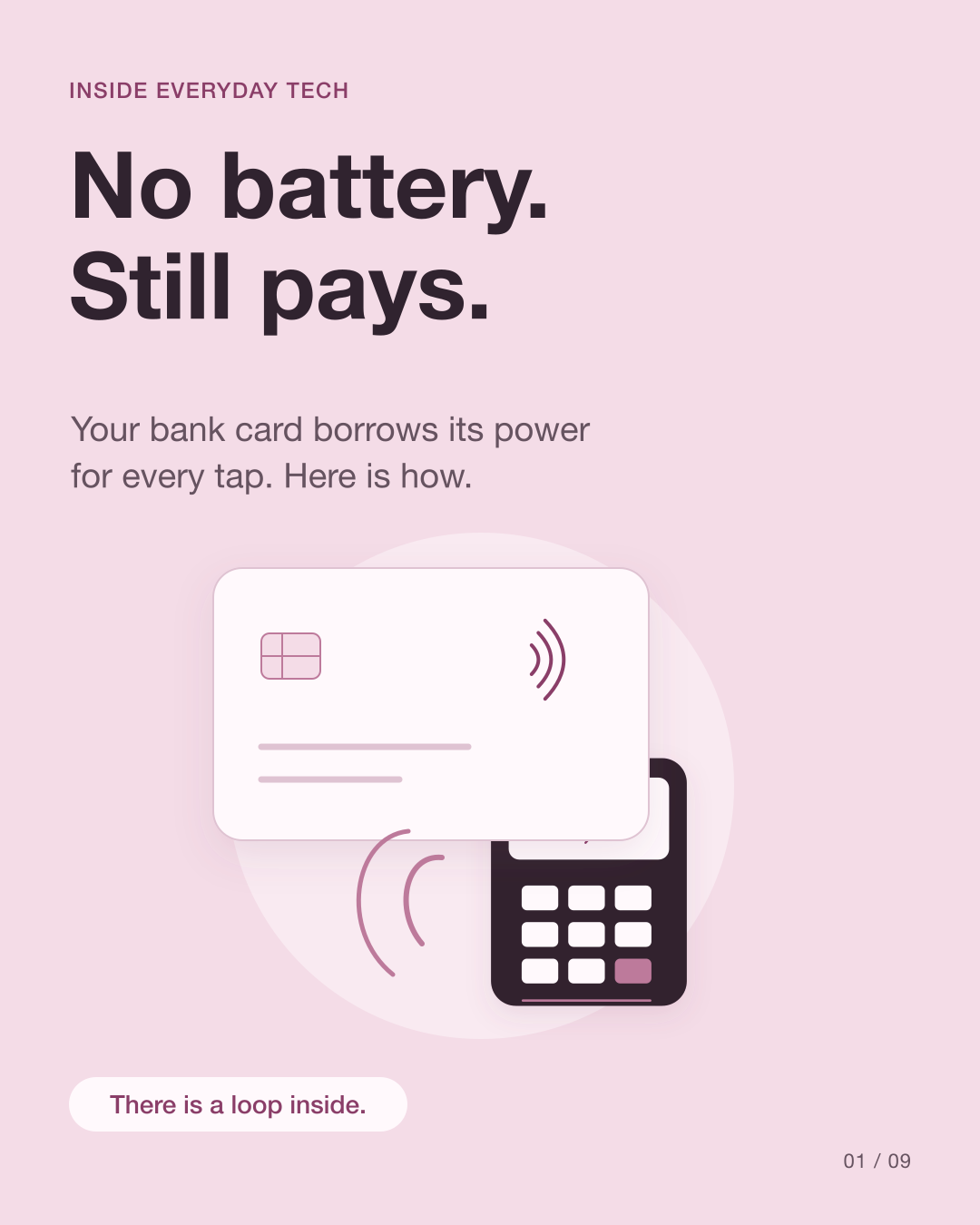
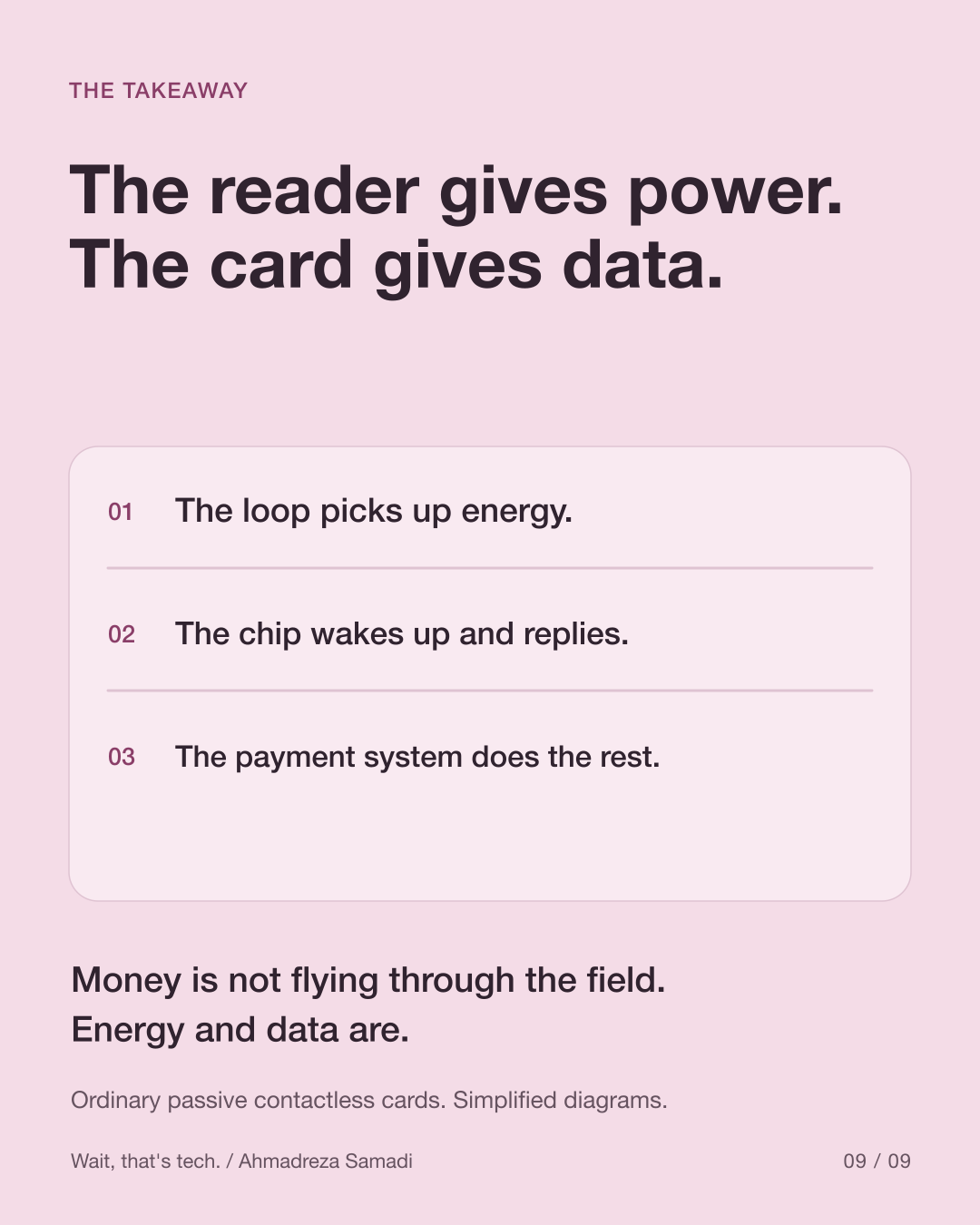
Your ordinary contactless bank card has no battery to recharge. The payment reader supplies a little energy at the moment you tap, and the chip uses it to communicate.
At a glance
Power
The reader supplies a changing magnetic field.
Response
A coil inside the card powers its chip.
Payment
The chip exchanges transaction data with the reader.
Where does a contactless card get its power?
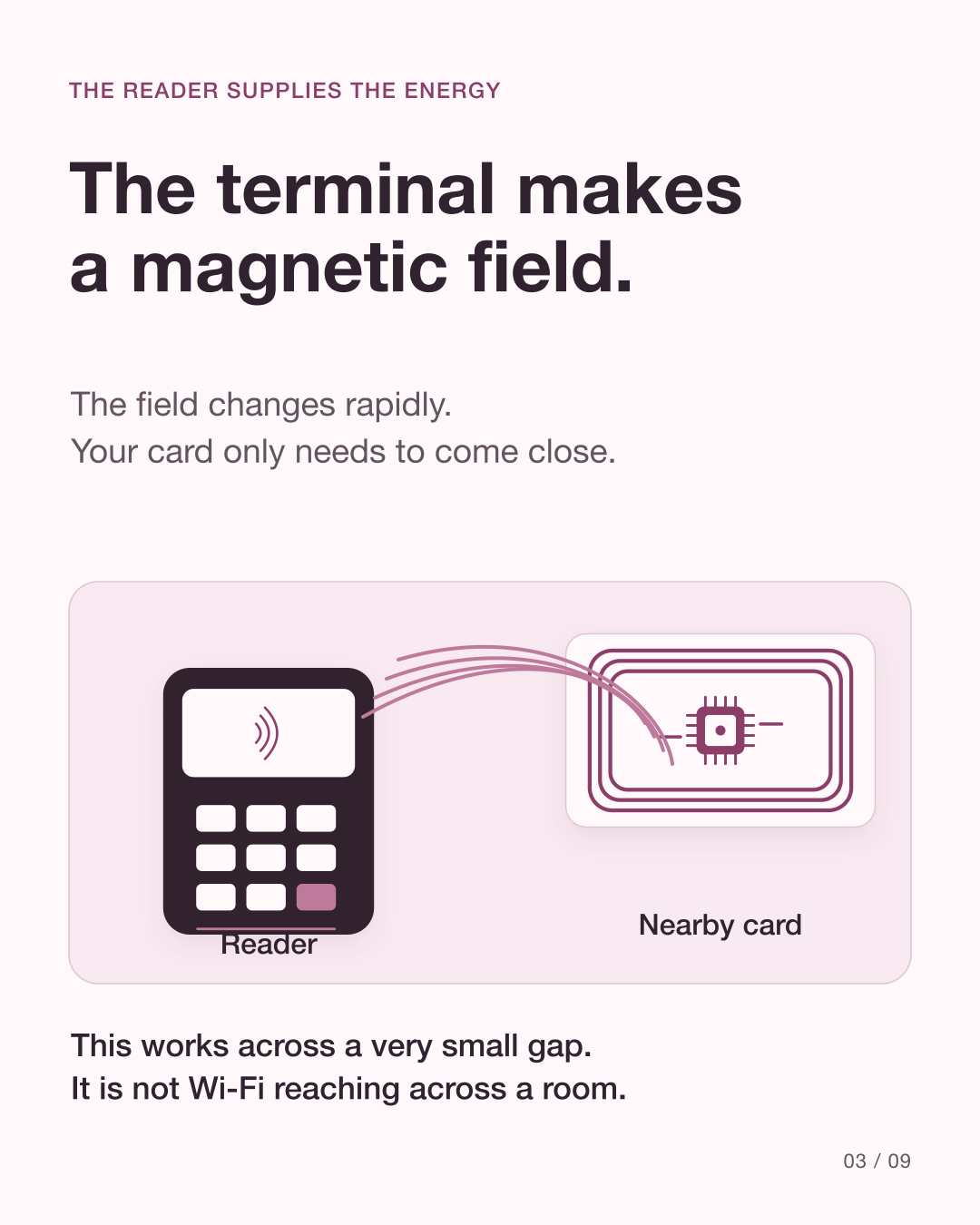
A powered payment terminal creates a short-range electromagnetic field. Bring a passive card close to it and the card can harvest energy from that field. This is part of the near-field communication behind a contactless tap.
Source: NFC Forum: What NFC does
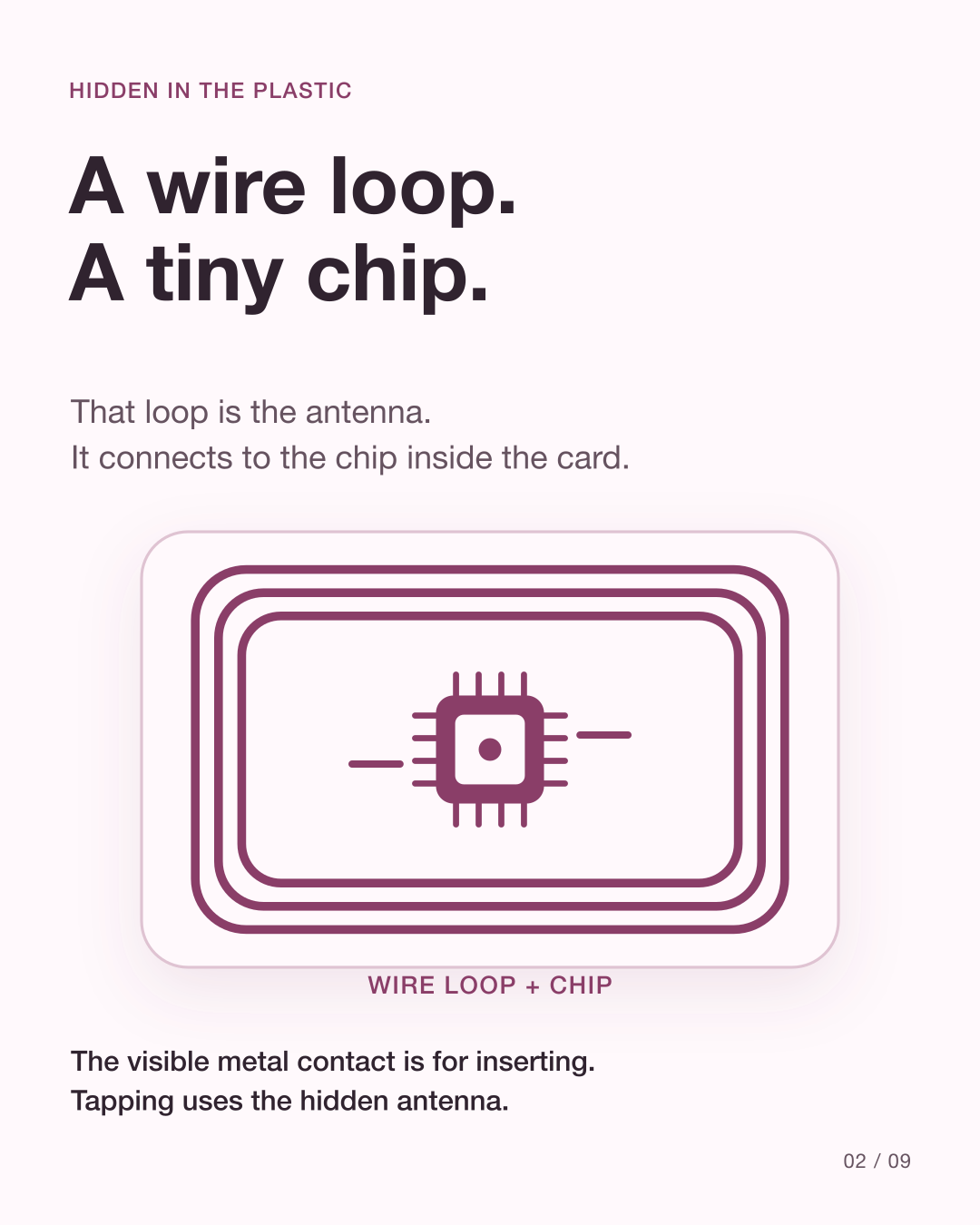
There is a tiny circuit inside the plastic
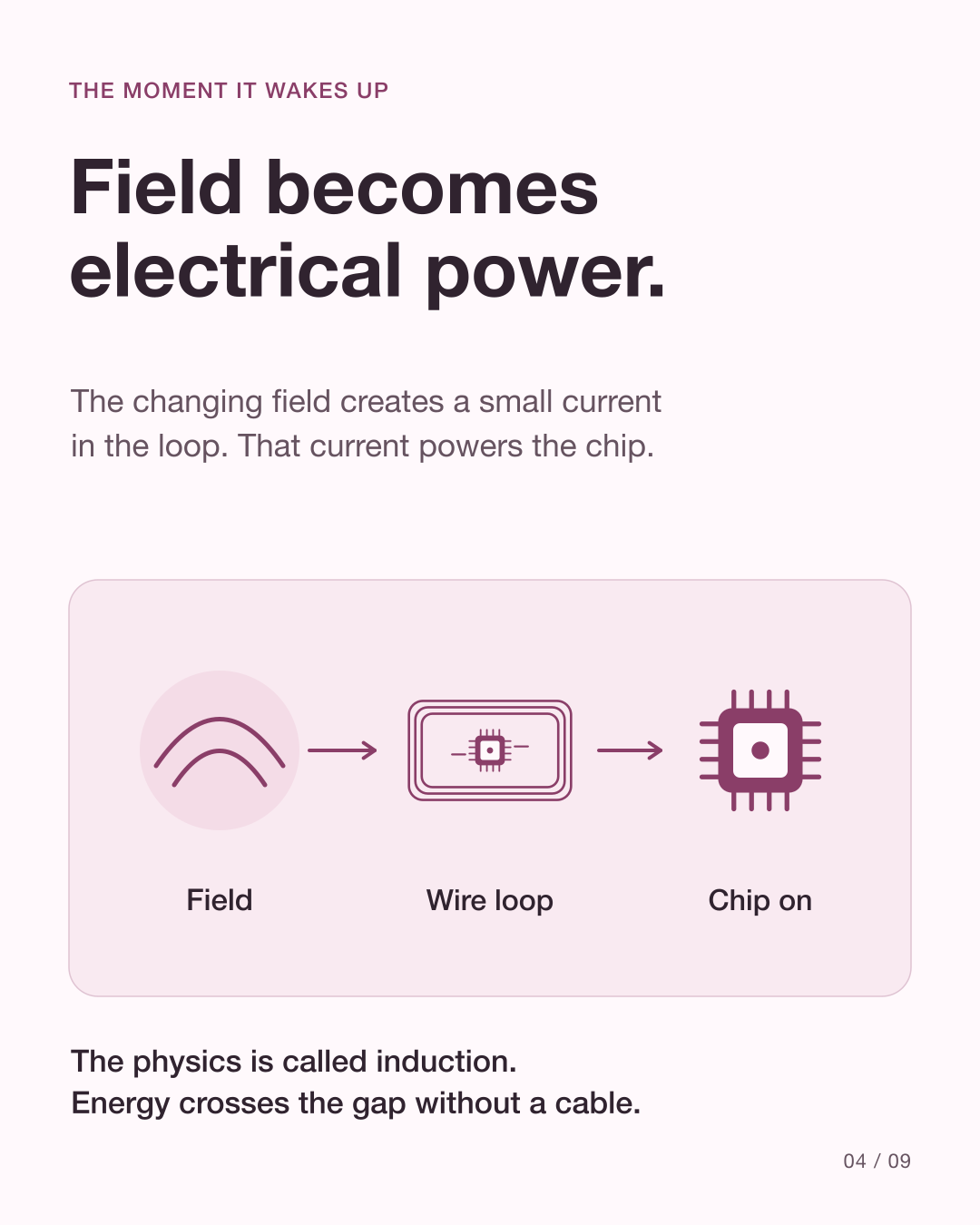
An antenna coil inside the card picks up the changing field. The card turns the received energy into the small electrical supply its chip needs. The drawings show that hidden antenna and chip as a simplified cutaway, not the layout of a particular bank card.
Source: NFC Forum: What NFC does · STMicroelectronics: ST25 NFC guide
The same nearby link carries data
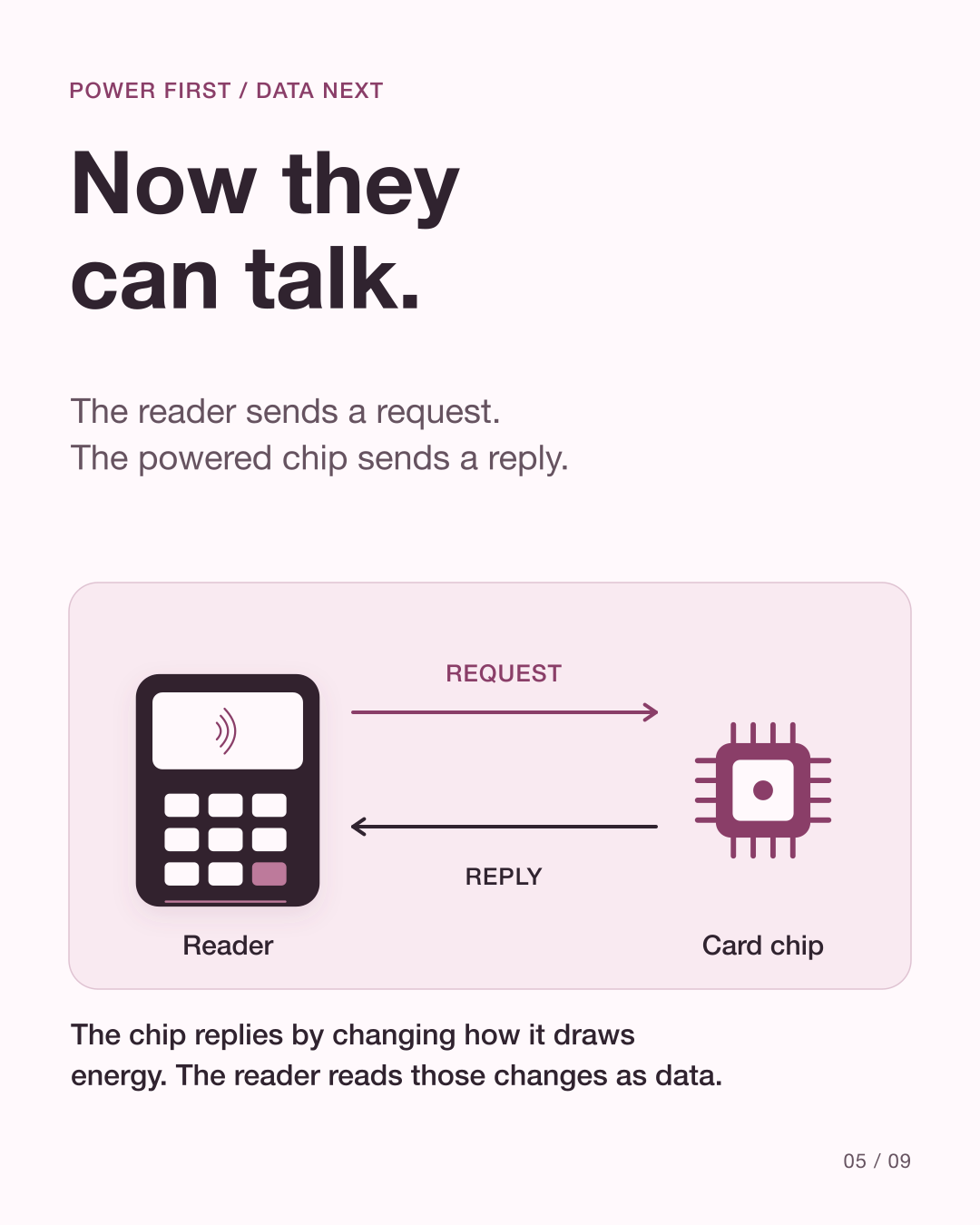
The reader and chip exchange payment information. An ordinary passive chip replies by changing the electrical load it presents to the reader’s field. The reader detects those tiny changes as data. Power starts the chip; the data is the payment conversation. This is a simplified description of load modulation.
Source: EMVCo: Communication enhancement of contactless payment devices · STMicroelectronics: ST25 NFC guide
Does holding a card near the reader mean payment is approved?
The harvested energy wakes the electronics. The payment itself is a transaction processed by the payment system. Bringing a card near a reader supplies a way to communicate; it does not mean a payment is automatically approved.
Source: EMVCo: EMV Contactless Chip · EMVCo: Communication enhancement of contactless payment devices
A tap is not just a fixed recording
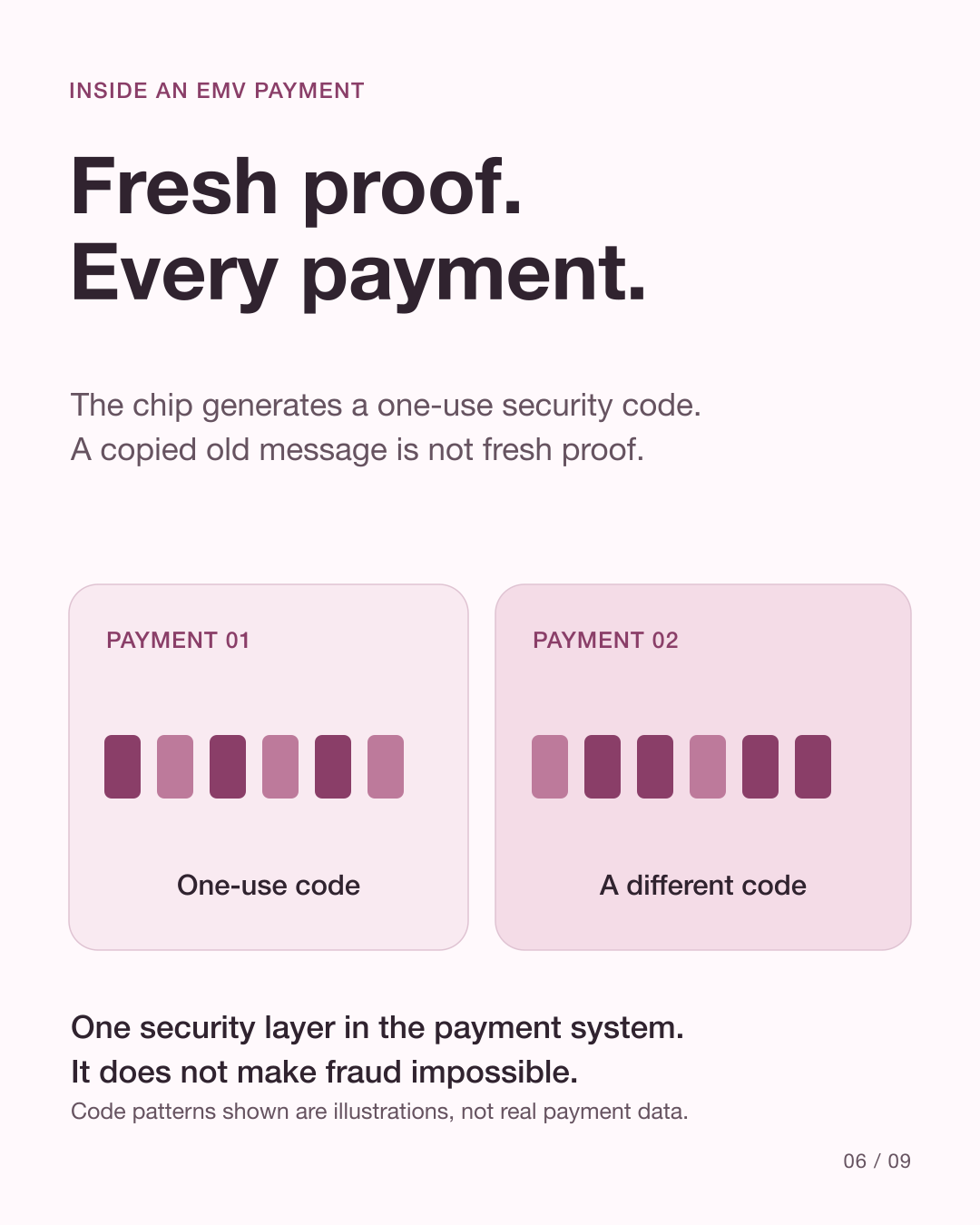
EMV contactless payments generate a one-time security code for each transaction. This helps the system check the payment rather than relying only on a reusable static message. It is a security measure, not a promise that fraud is impossible.
Source: EMVCo: EMV Contactless Chip
Why you have to hold the card close
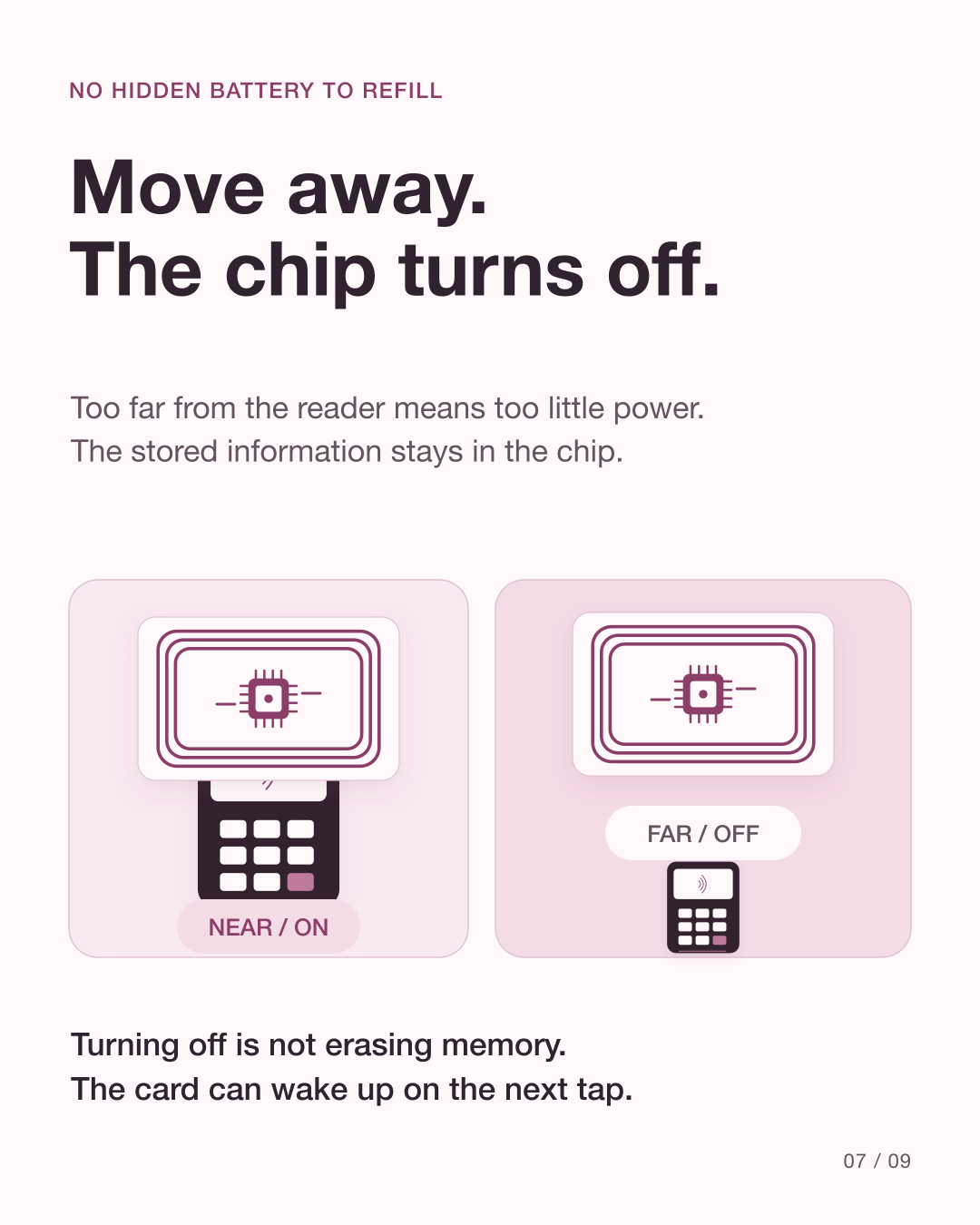
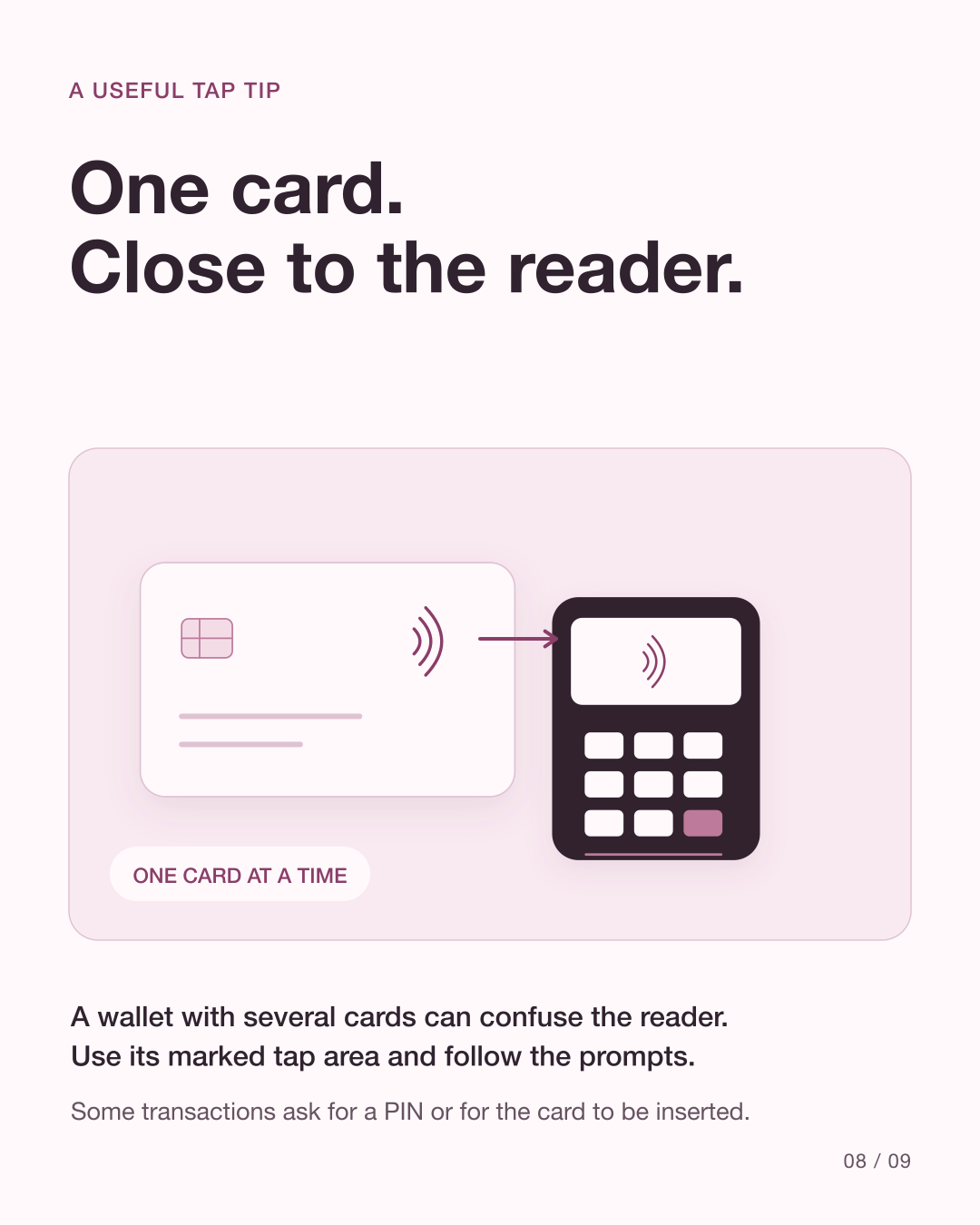
This link is designed for nearby devices, not communication across a room. Tap one card at the reader’s marked location and wait for the terminal’s result. A PIN request, approval rule or fallback to inserting the card can depend on the bank, terminal and transaction. The no-battery explanation applies to ordinary passive cards; phones and watches are different devices.
Source: NFC Forum: What NFC does · EMVCo: EMV Contactless Chip
See the explanation in slides
These original diagrams explain the mechanism. The carousel is in English.
View all 9 English slides
Download the English carousel PDF
Sources
Primary references checked on 10 October 2026. Product support and behavior can vary.