 Ahmadreza Samadi / Home
Technology and proptech, explained
How do property tokens work, and can you sell them?
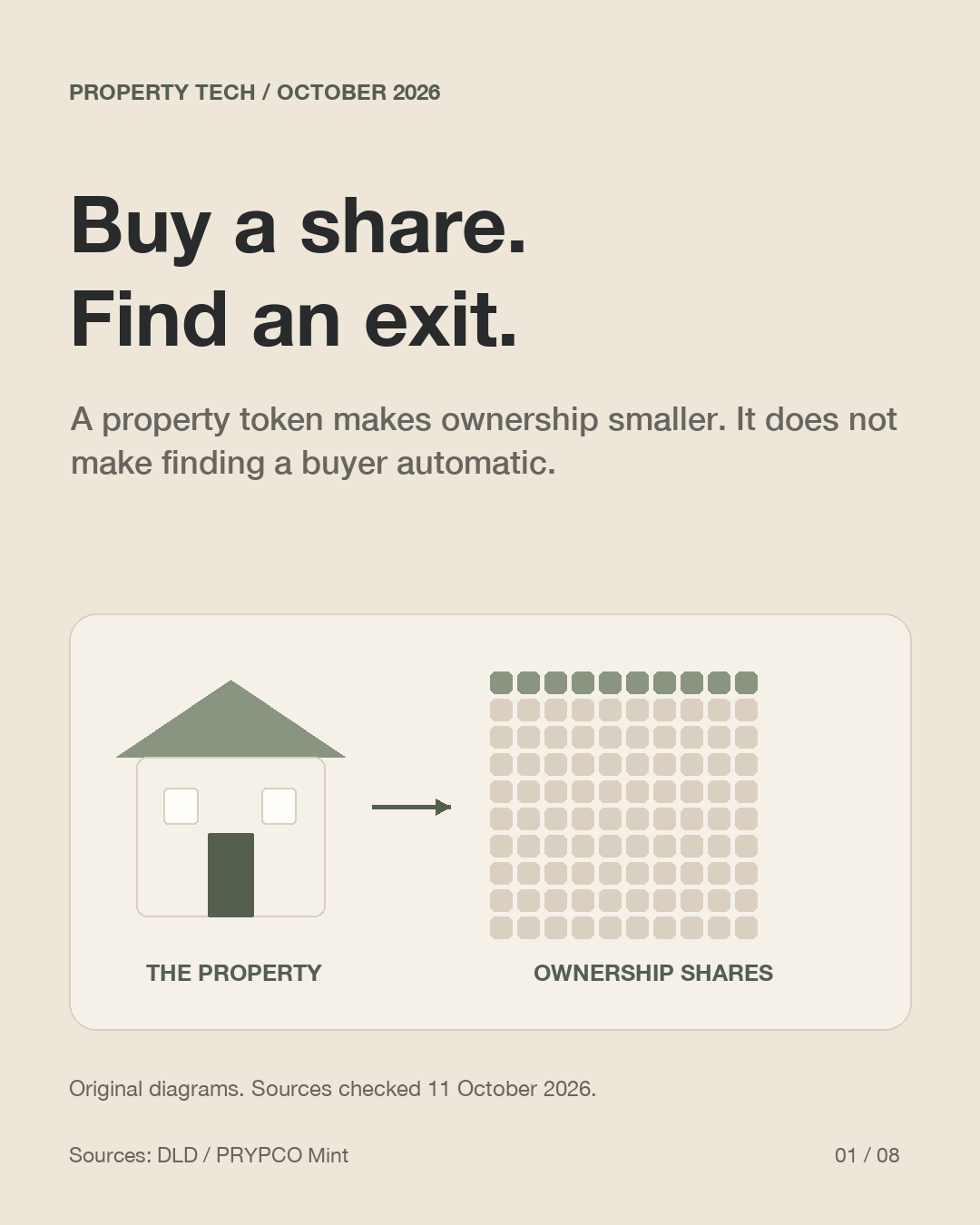
A property token can represent a small ownership interest in a real property. Selling it still depends on the rights, resale rules and available buyers. PRYPCO Mint’s October 2026 operator report brings that liquidity question back into focus.
The share
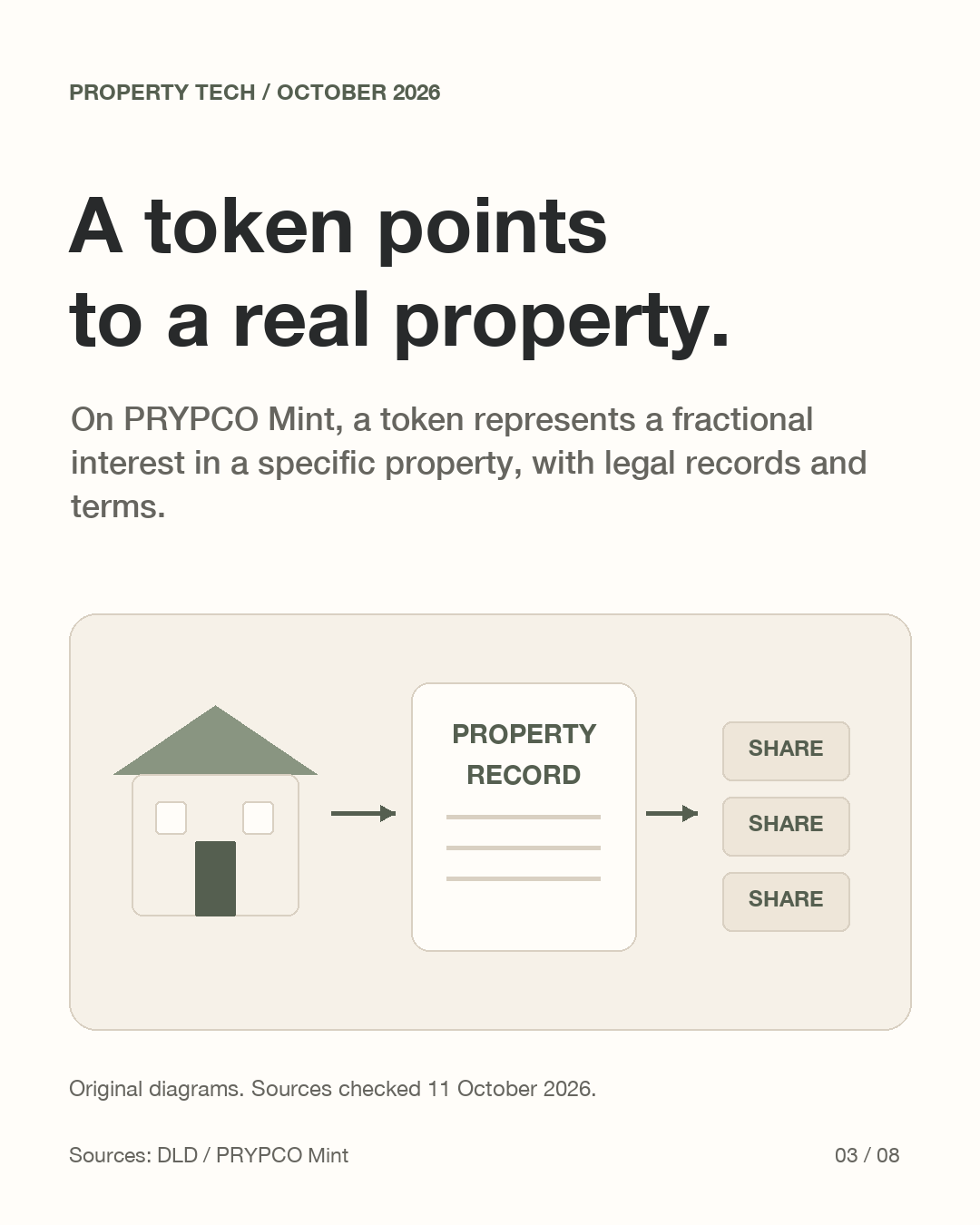
On PRYPCO Mint, a token relates to a fractional interest in a specific property.
The income
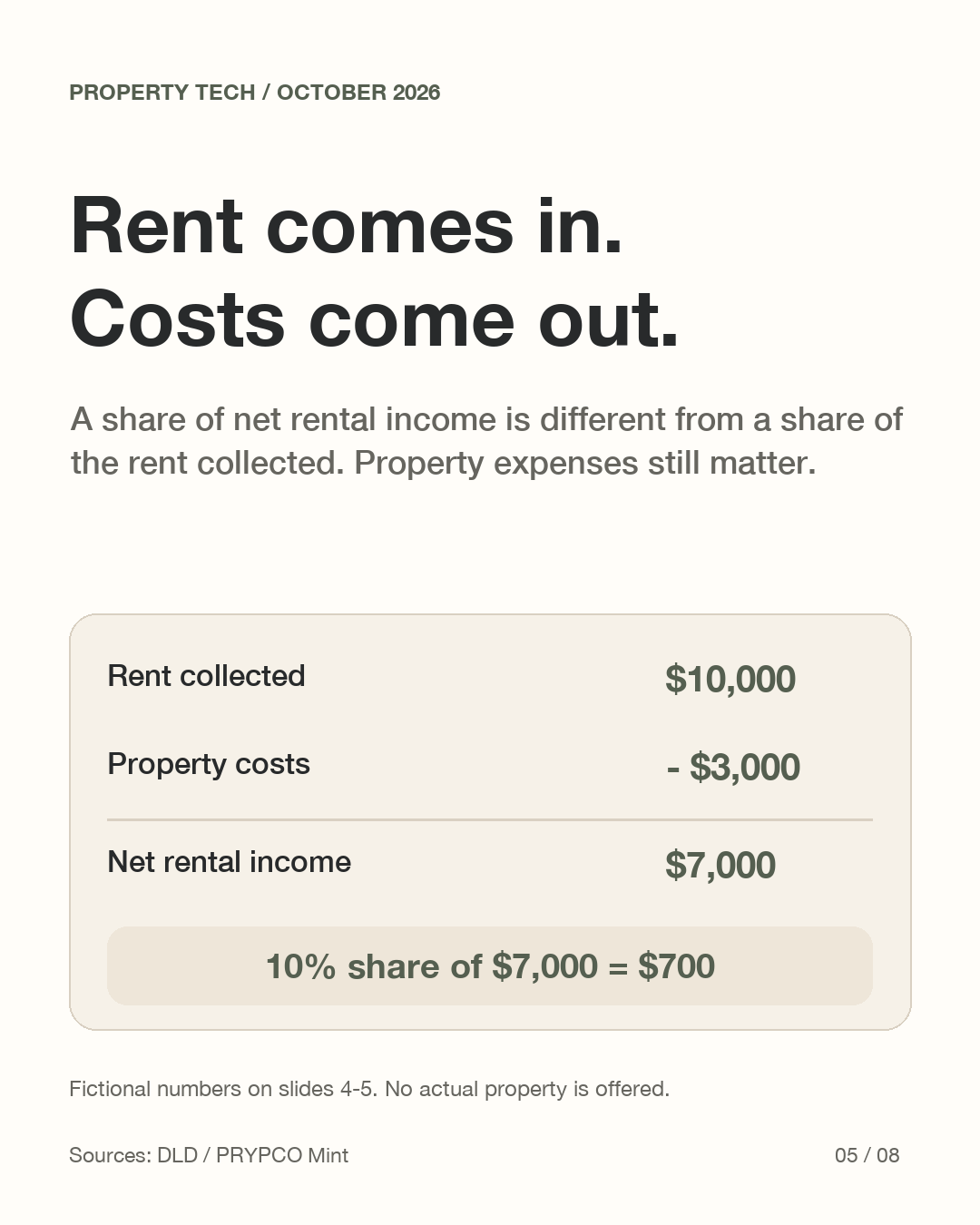
A percentage of net rental income differs from a percentage of rent collected.
The exit
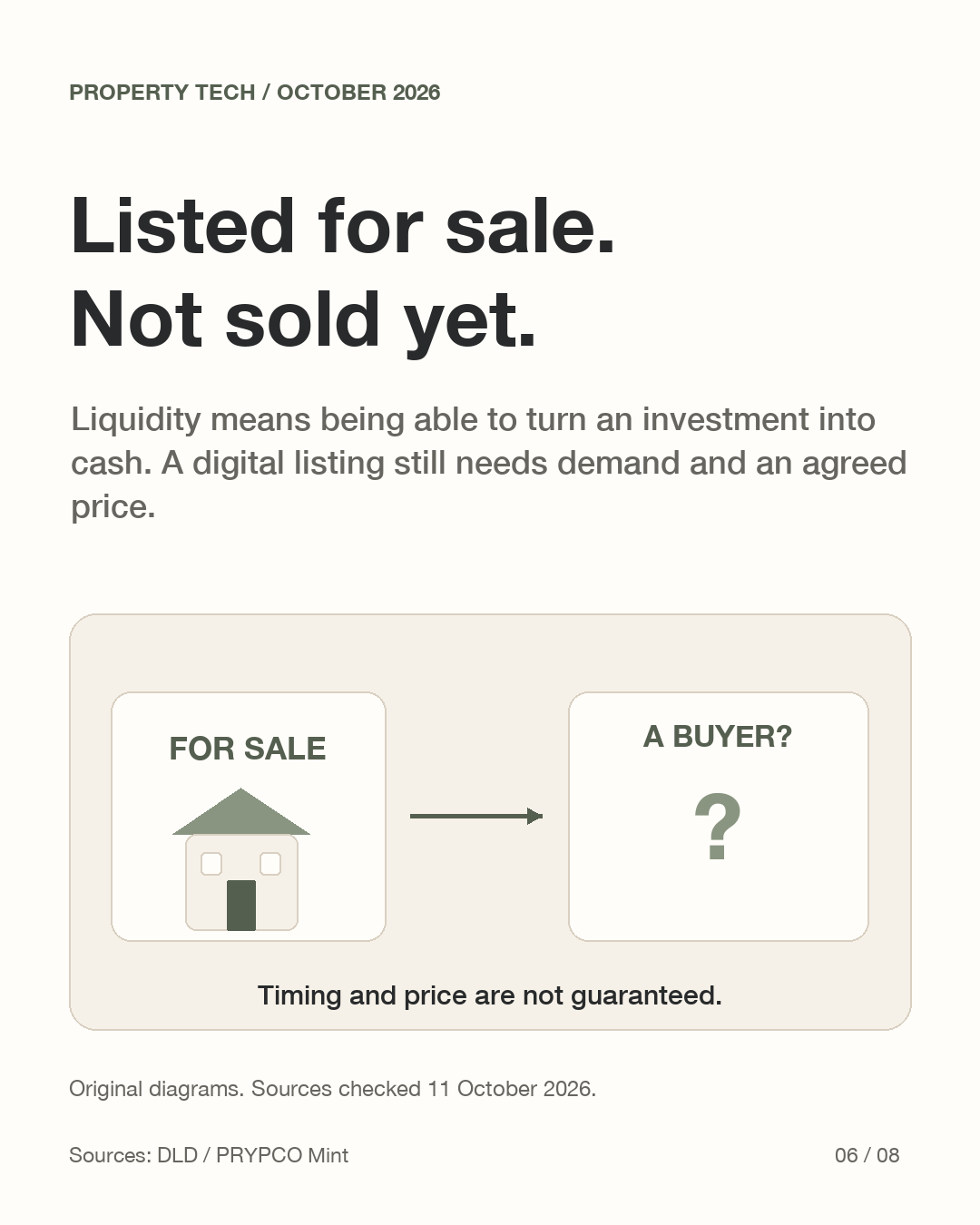
Digital records do not guarantee a quick sale, buyer or price.
Why talk about liquidity now?
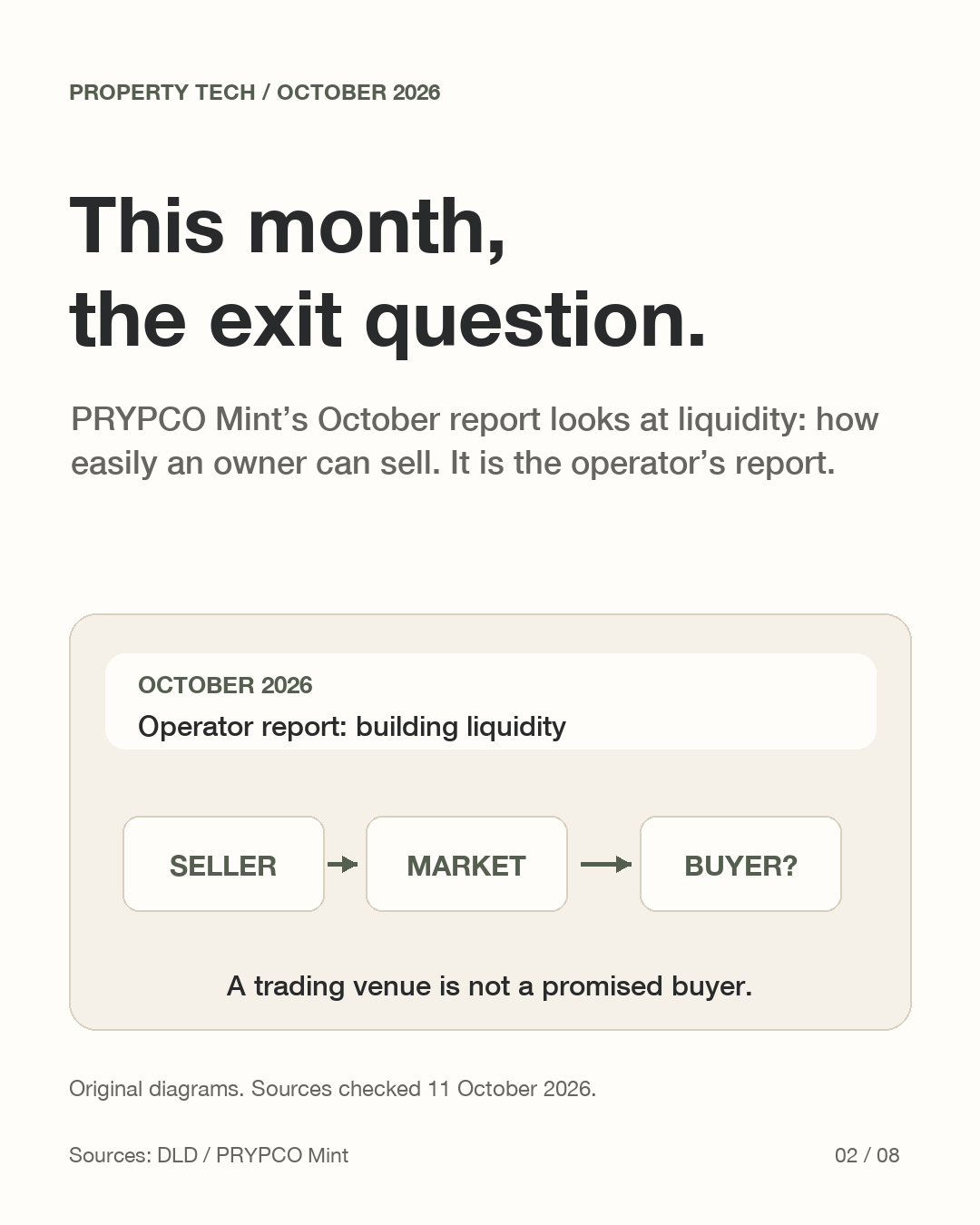
PRYPCO Mint published a report labelled October 2026 about building liquidity in tokenised real estate. Its exact publication day is not exposed. This operator report supplies the current connection; it is not independent proof of performance. DLD’s 9 February announcement and VARA’s 19 February alert describe the controlled Phase II pilot as dated background, rather than news from this week.
Source: PRYPCO Mint: Building Liquidity in Tokenized Real Estate · Dubai Land Department: Phase II tokenisation announcement, 9 February 2026 · VARA: Consumer and Marketplace Alert, 19 February 2026
What does the token represent?
PRYPCO Mint describes a token as a fractional interest in a particular physical property. The digital record must connect to the property and its legal structure. This platform-specific explanation does not mean every product called a property token gives the same rights. Mint says investors are not each issued an individual title deed.
Source: PRYPCO Mint: What is a property token and how does it work?
How does a smaller share work?
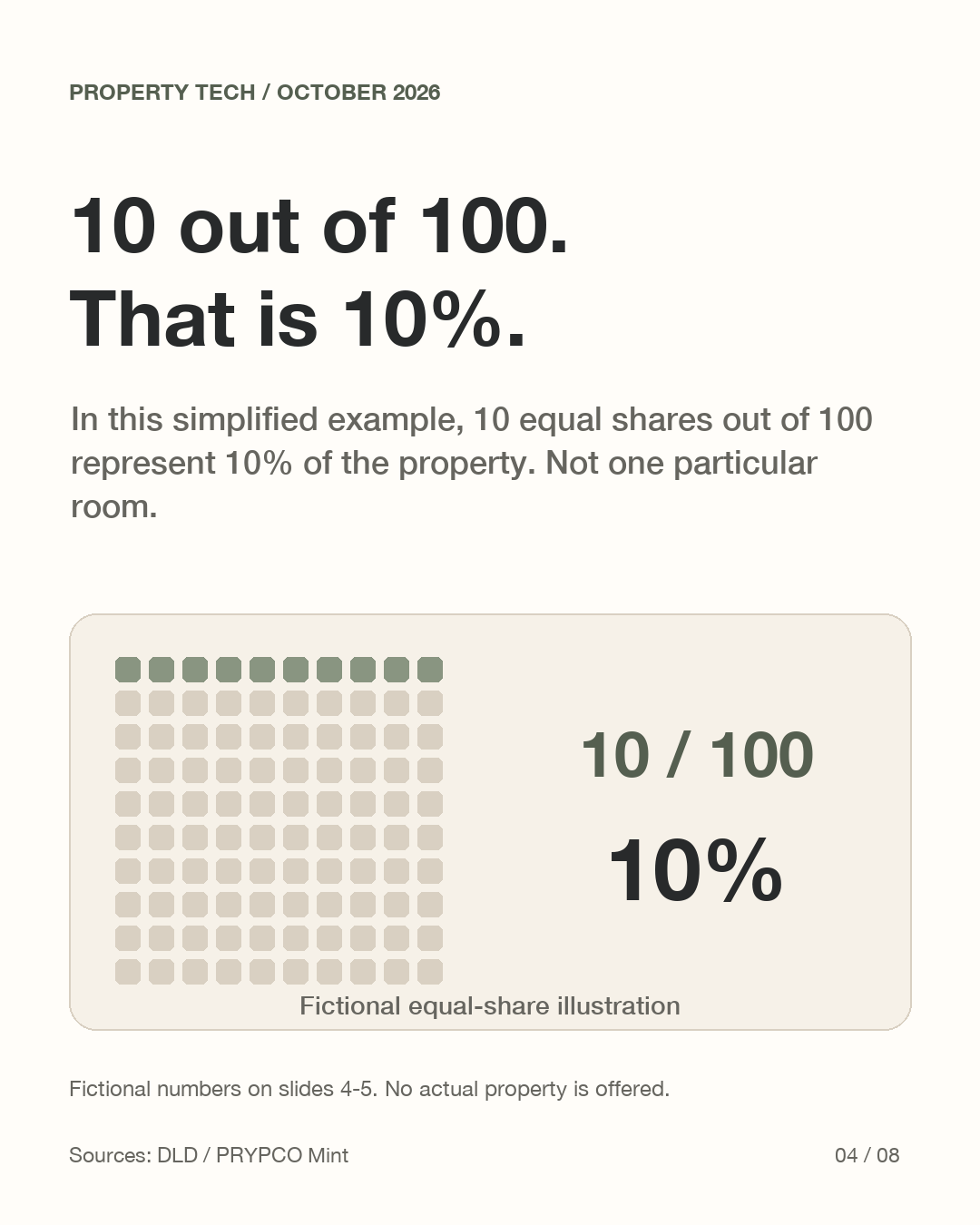
Imagine a fictional property divided into 100 equal shares. Holding 10 gives a 10% interest: 10 divided by 100 equals 0.10. The shares are an interest in the property, not ownership of one particular room. These round numbers explain proportions; they do not describe a listed property or any actual investment.
Source: PRYPCO Mint: What is a property token and how does it work?
Why is net rent different from collected rent?
For a fictional period, suppose a property collects $10,000 in rent and has $3,000 in property costs. That leaves $7,000 of net rental income. A 10% share of $7,000 is $700. This simplified arithmetic is not a payout forecast. Actual distributions depend on the applicable costs, fees and terms.
Source: PRYPCO Mint: What is a property token and how does it work? · PRYPCO Mint: Terms and Conditions
Does a listing mean a sale?
Liquidity describes how readily a holding can become cash. A digital listing can make an offer visible, but completing a sale still requires a permitted transfer, a willing buyer and an agreed price. Mint’s risk disclosure warns that sales may be delayed or impossible and that a fair-price exit is not guaranteed. Resale availability and conditions must be checked for the actual product.
Source: PRYPCO Mint: Building Liquidity in Tokenized Real Estate · PRYPCO Mint: Risk warnings
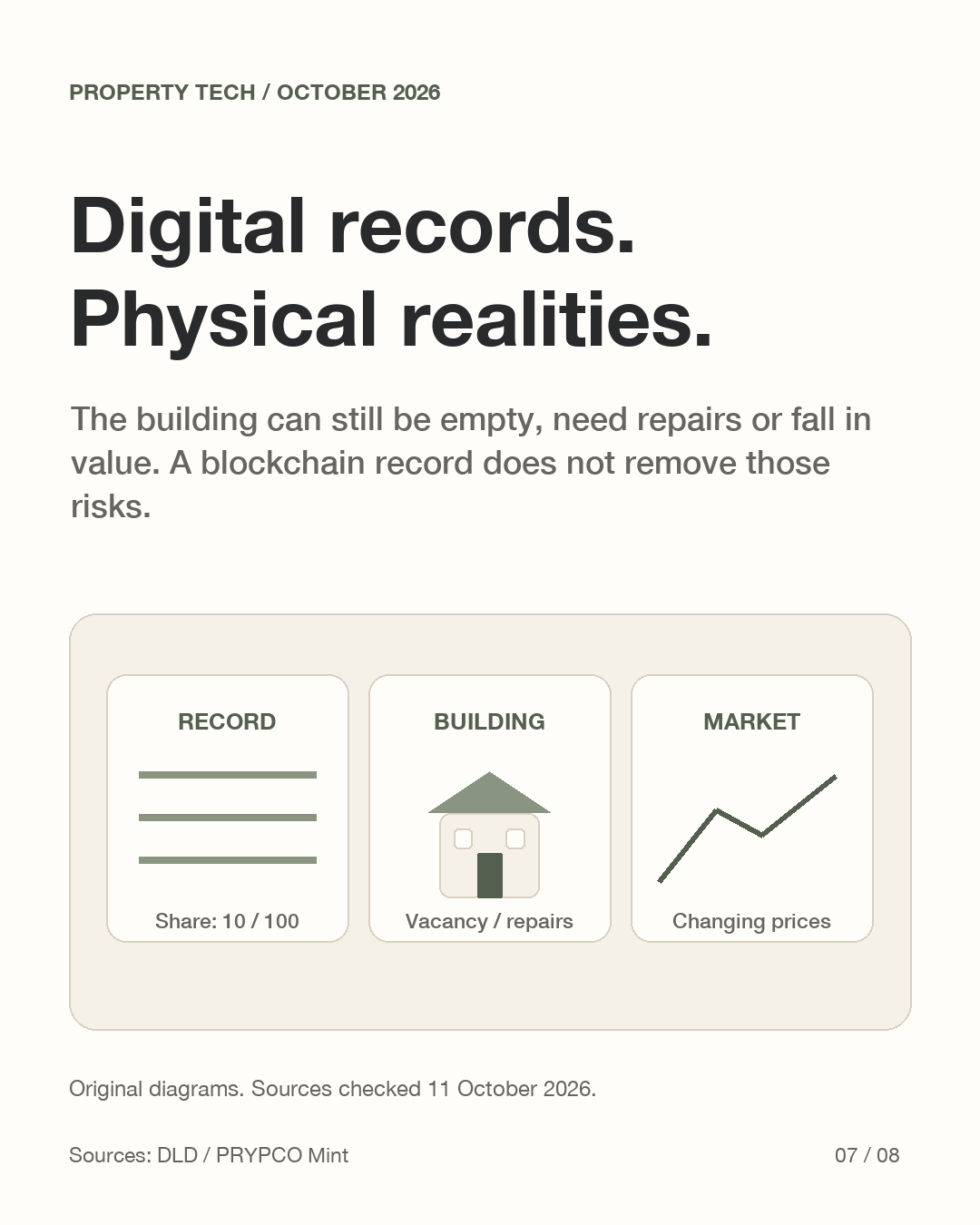
What stays physical?
Digital records do not change the building into software. Vacancies can reduce rent, repairs can cost money, and property values can fall. Token records may document a share, while the economic result still depends on the underlying building and market. These diagrams are original qualitative illustrations, not property inspections or measured results.
Source: PRYPCO Mint: What is a property token and how does it work? · PRYPCO Mint: Risk warnings · PRYPCO Mint: Terms and Conditions
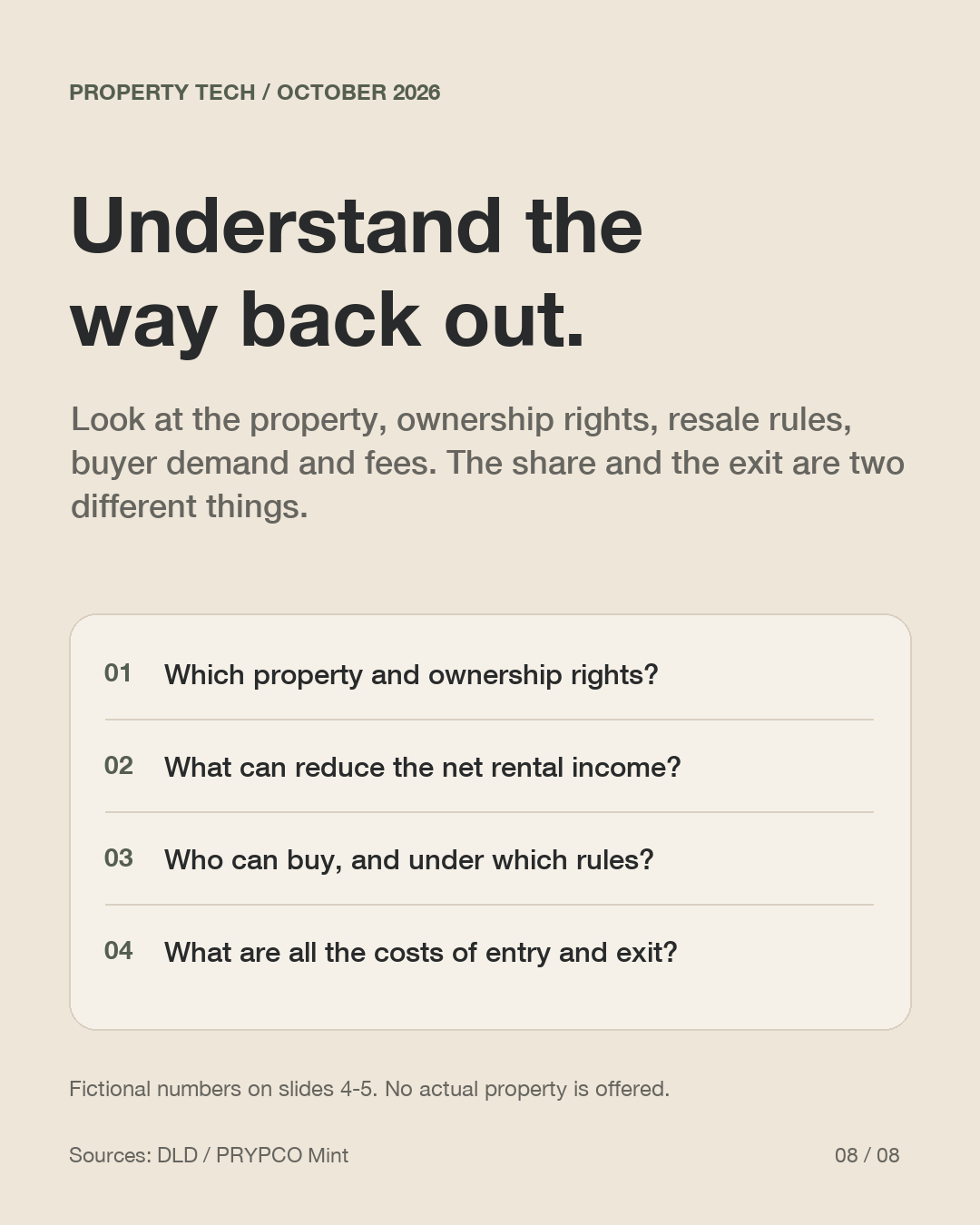
Which parts should you understand?
Read how the property is identified, which rights attach to the share, what reduces distributable income, and which transfer rules and fees apply. Keep the ownership record and resale process as separate questions. This is an educational technology explanation, not an investment recommendation, offer, endorsement, or guarantee of returns or liquidity.
Source: PRYPCO Mint: What is a property token and how does it work? · PRYPCO Mint: Risk warnings · PRYPCO Mint: Terms and Conditions · VARA: Consumer and Marketplace Alert, 19 February 2026
See the explanation in slides
These original diagrams explain the mechanism. The carousel is in English.
View all 8 English slides
Download the English carousel PDF
Sources
Primary sources checked on 2026-10-11. Dated announcements and operator reports are attributed in the explanation; availability and terms can change.
- PRYPCO Mint: Building Liquidity in Tokenized Real Estate
- PRYPCO Mint: What is a property token and how does it work?
- PRYPCO Mint: Risk warnings
- PRYPCO Mint: Terms and Conditions
- Dubai Land Department: Phase II tokenisation announcement, 9 February 2026
- VARA: Consumer and Marketplace Alert, 19 February 2026