 Ahmadreza Samadi
AI property briefs: A tidy property brief still needs evidence.
Attach a source trail to each important claim and keep gaps visible.
Source publication date: not stated on the opened source. Primary source checked: 2026-11-03. English original illustrated explainer.
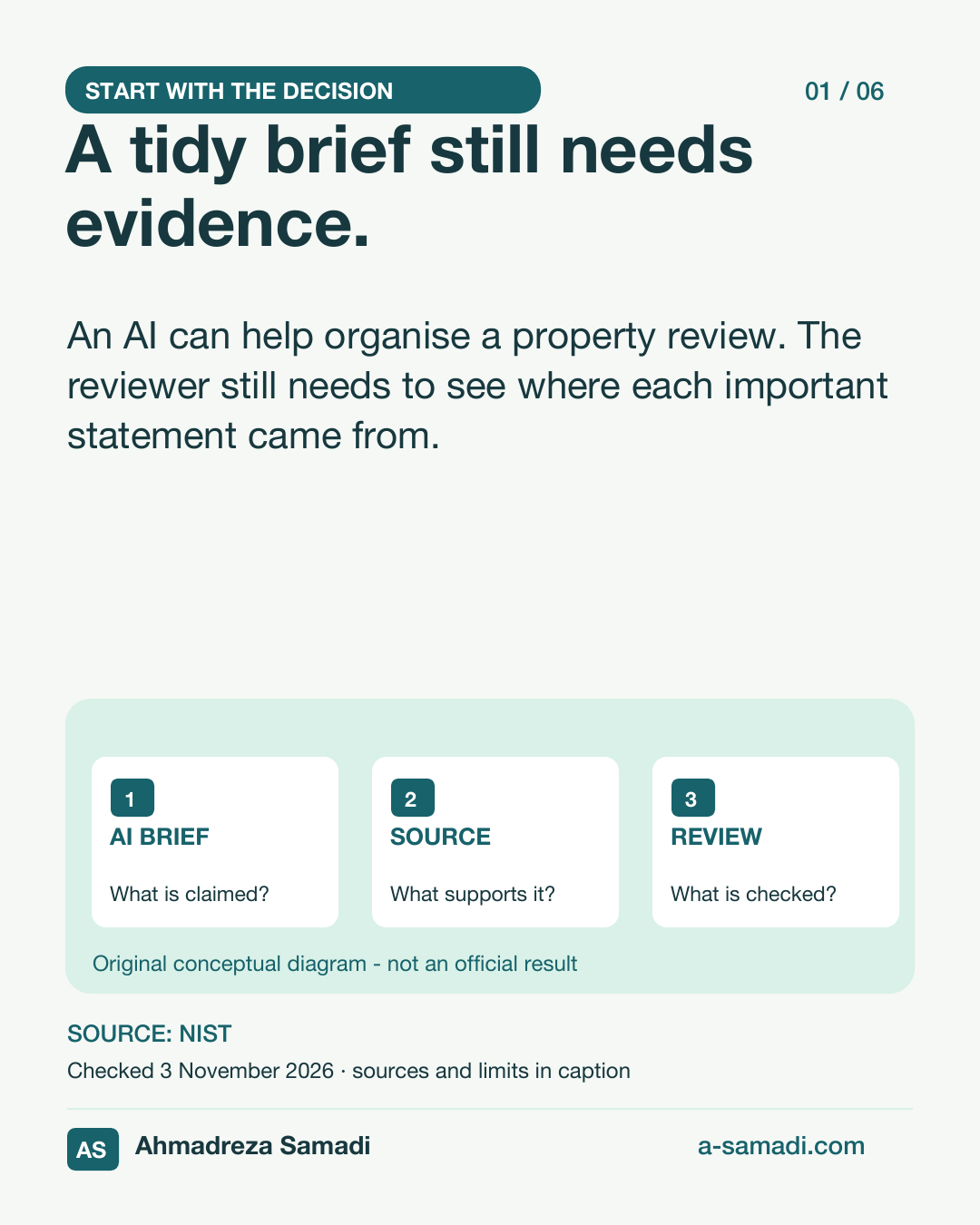
A tidy brief still needs evidence.
An AI can help organise a property review. The reviewer still needs to see where each important statement came from.
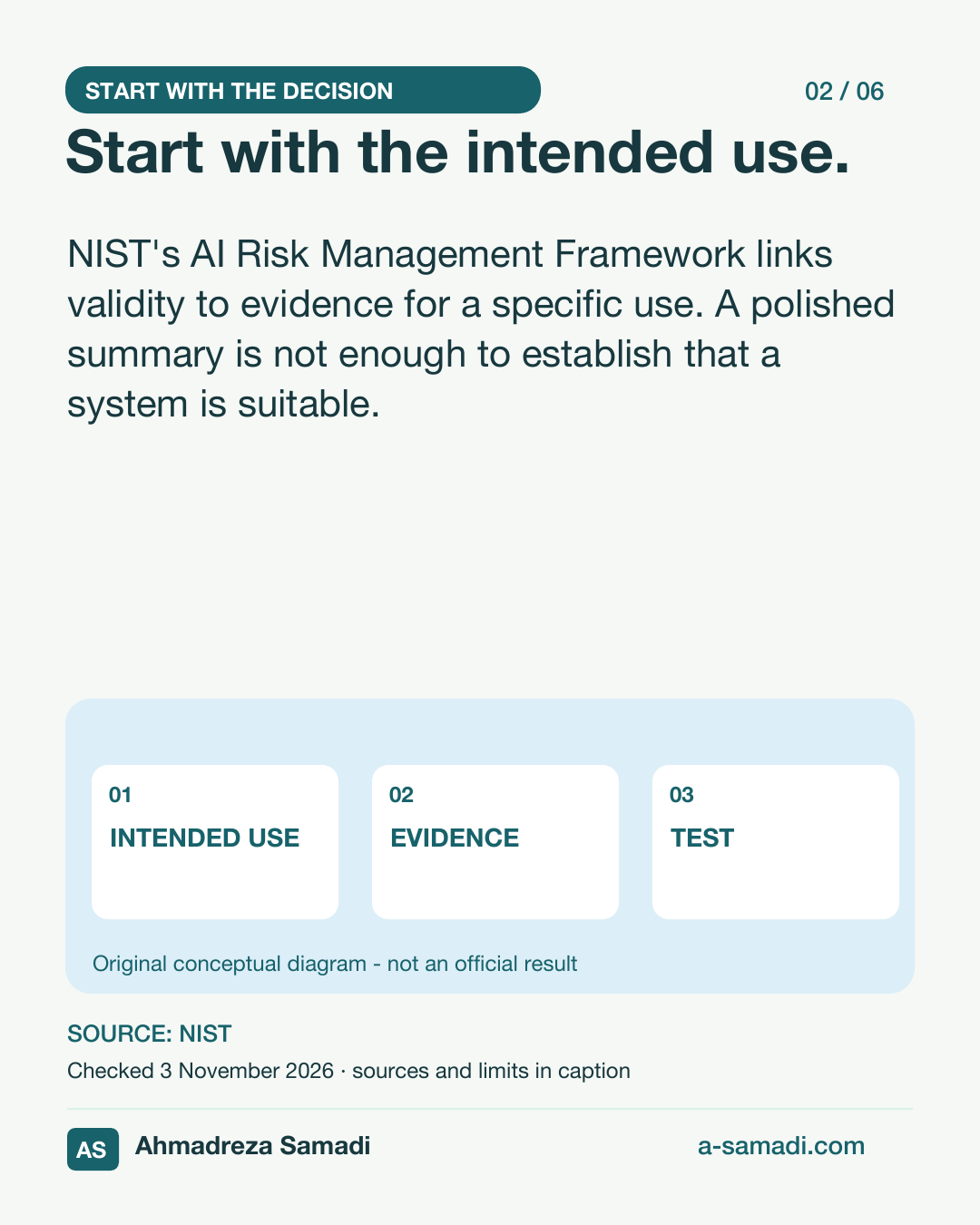
Start with the intended use.
NIST's AI Risk Management Framework links validity to evidence for a specific use. A polished summary is not enough to establish that a system is suitable.
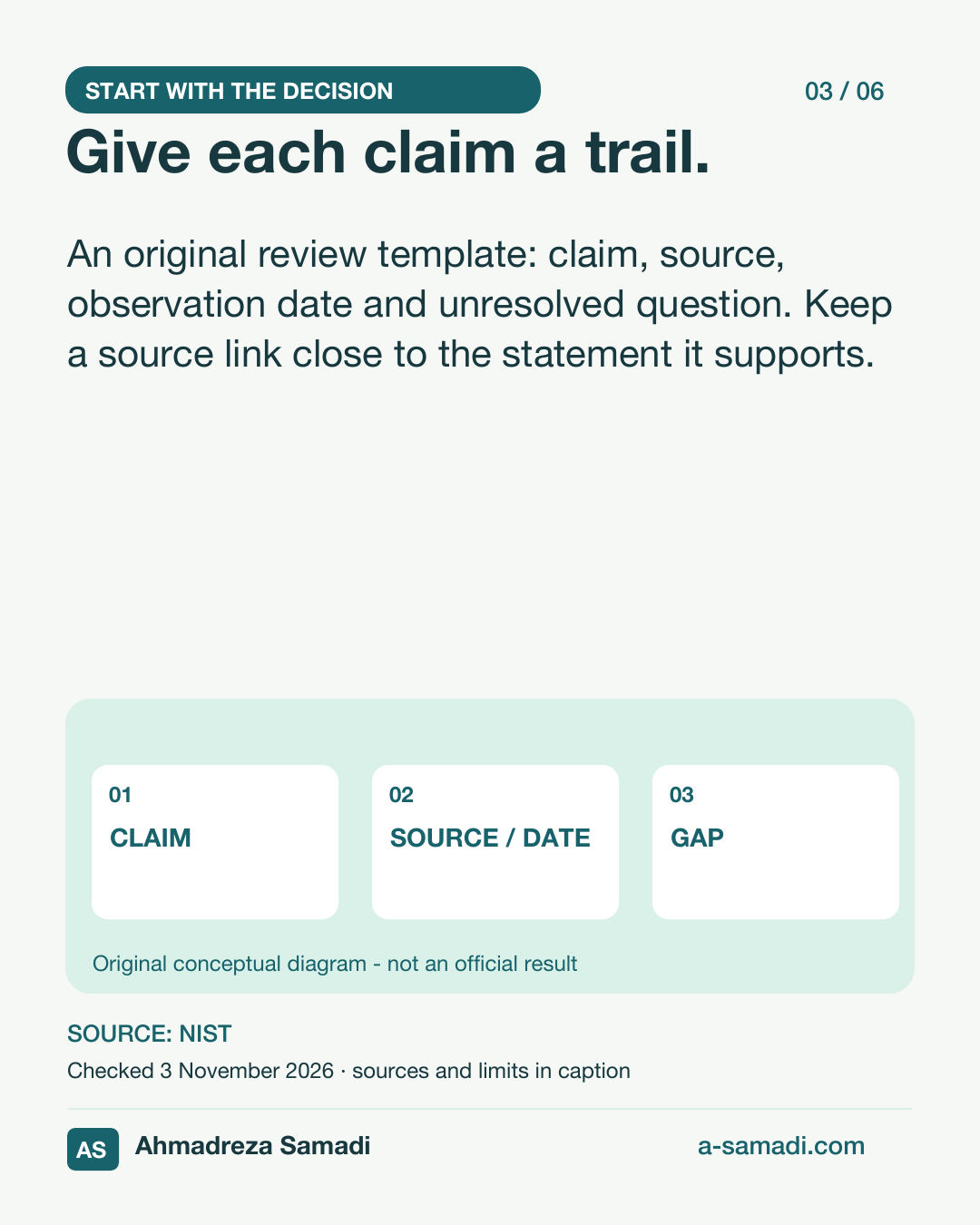
Give each claim a trail.
An original review template: claim, source, observation date and unresolved question. Keep a source link close to the statement it supports.
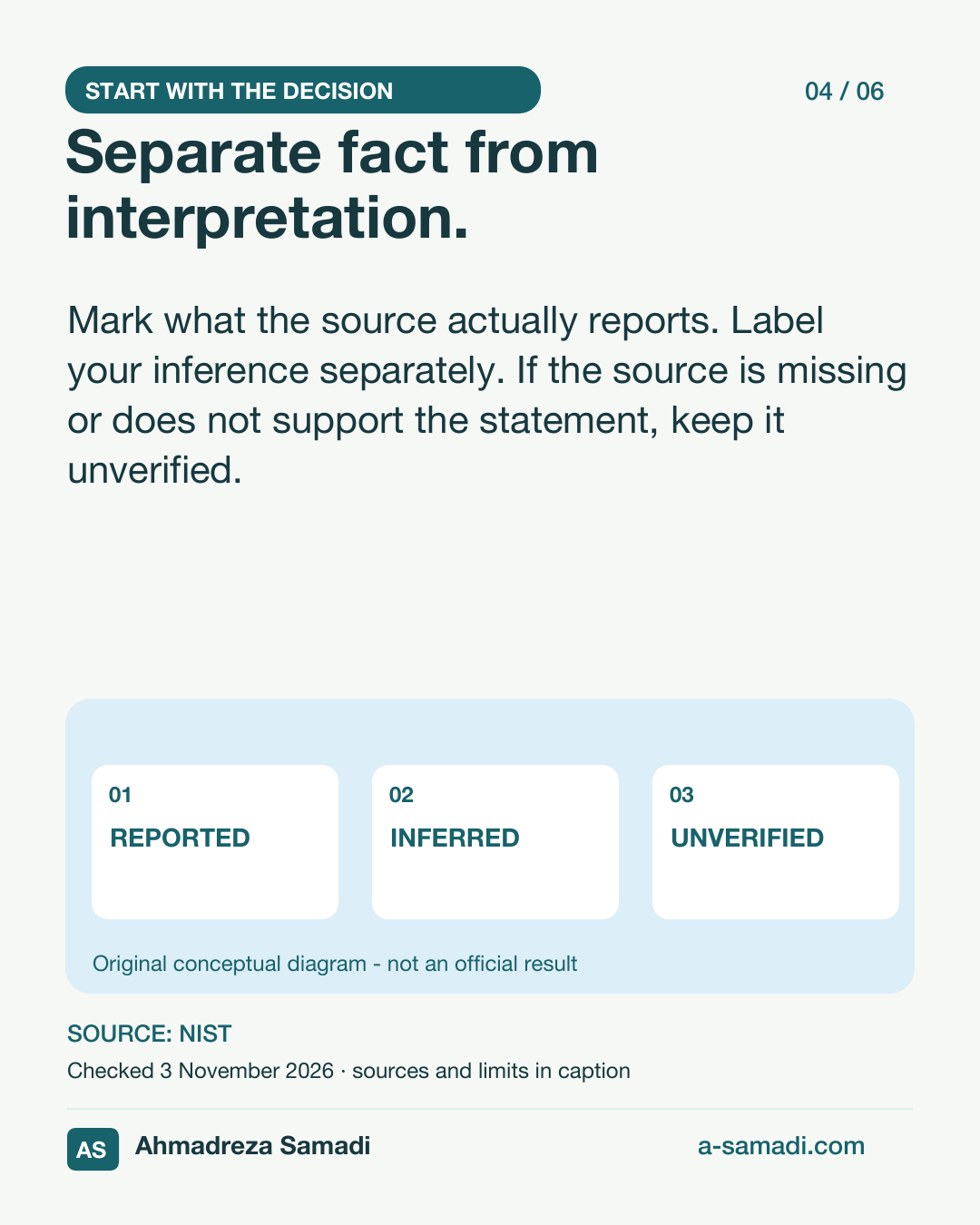
Separate fact from interpretation.
Mark what the source actually reports. Label your inference separately. If the source is missing or does not support the statement, keep it unverified.
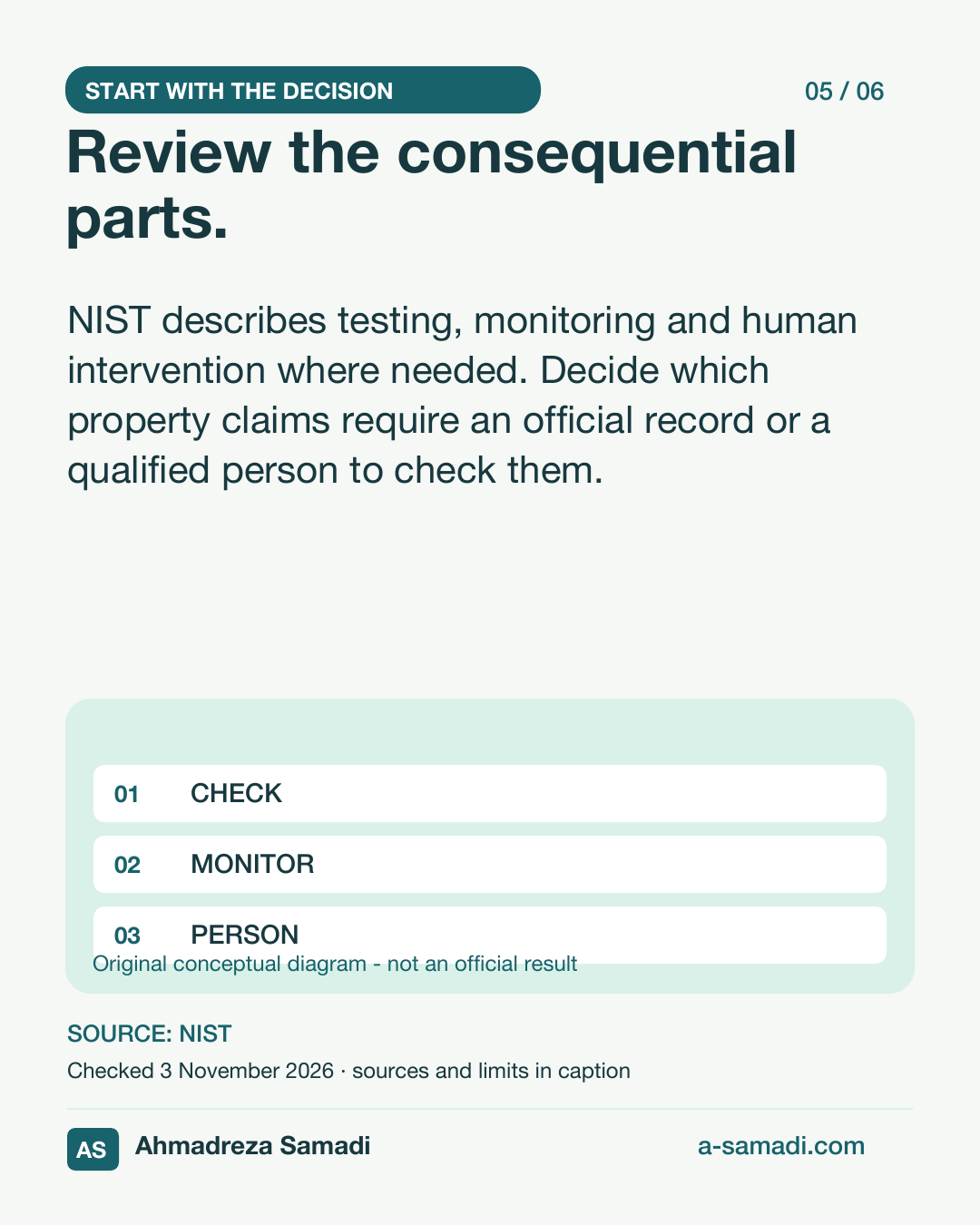
Review the consequential parts.
NIST describes testing, monitoring and human intervention where needed. Decide which property claims require an official record or a qualified person to check them.
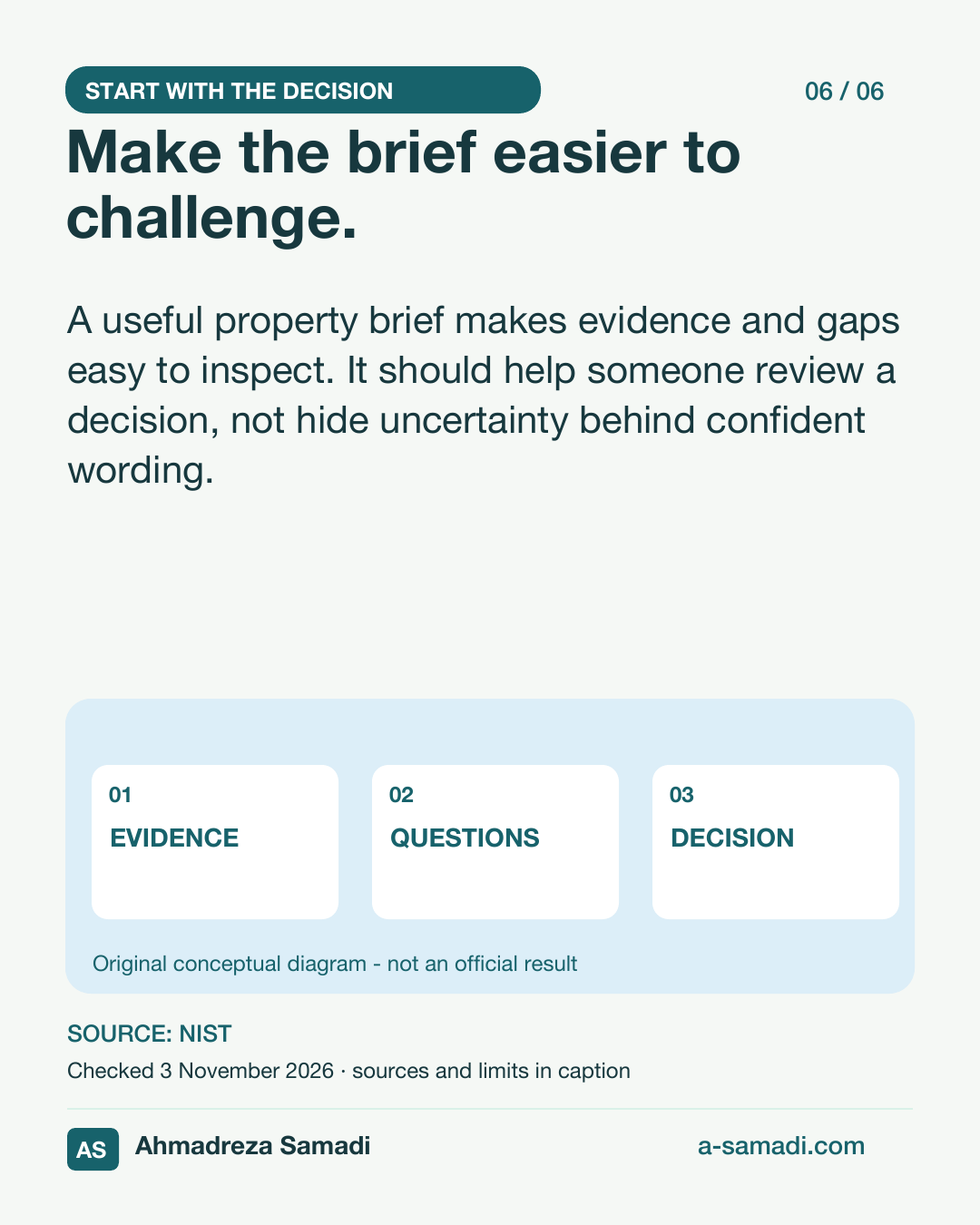
Make the brief easier to challenge.
A useful property brief makes evidence and gaps easy to inspect. It should help someone review a decision, not hide uncertainty behind confident wording.
Source and limits
Original review template informed by NIST AI RMF 1.0 (2023); NIST states an update is in progress. Not a NIST checklist or an assessment of a property, company or model. Original conceptual diagrams, not an official result or endorsement. AI-assisted research and writing.